
How do Indicators and Controllers work in a hierarchical control system?
Leave a message

In the realm of industrial automation, hierarchical control systems play a pivotal role in ensuring the efficient and reliable operation of complex processes. At the heart of these systems are indicators and controllers, which serve as the eyes and hands that monitor and regulate various parameters. As a leading supplier of indicators and controllers, I am excited to delve into how these essential components work within a hierarchical control system.
Understanding Hierarchical Control Systems
A hierarchical control system is structured in a multi - level framework, where each level has a specific function and responsibility. The highest level typically involves strategic decision - making, such as long - term planning and overall system optimization. The middle levels handle coordination and supervision, while the lowest level is responsible for direct control of individual processes or equipment.
This hierarchical structure provides several advantages. It allows for modular design, making the system easier to develop, maintain, and expand. It also enables different levels to operate at different time scales, with the higher levels focusing on long - term trends and the lower levels on immediate adjustments.
The Role of Indicators in a Hierarchical Control System
Indicators are the visual or digital representation of process variables. They provide real - time information about the state of a system, allowing operators and control algorithms at different levels of the hierarchy to make informed decisions.
Low - Level Indicators
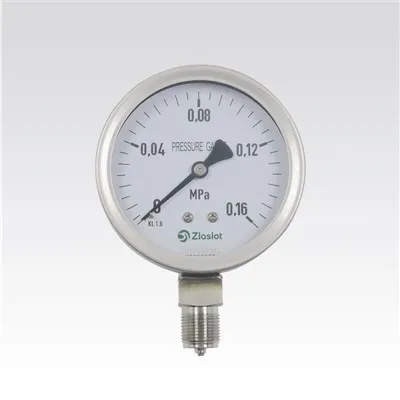
At the lowest level of the hierarchical control system, indicators are often directly connected to sensors. For example, a Melt Pressure Indicator measures the pressure of molten materials in a manufacturing process. These indicators convert the physical signals from sensors into readable values, such as pressure in pounds per square inch (psi) or temperature in degrees Celsius.
The data from these low - level indicators is crucial for local control loops. They provide feedback to the controllers at the same level, enabling them to make immediate adjustments to maintain the desired process conditions. For instance, if the melt pressure exceeds a certain threshold, the local controller can act to reduce the flow rate of the molten material.
Intermediate and High - Level Indicators
As we move up the hierarchy, indicators aggregate and summarize data from multiple low - level sources. Intermediate - level indicators might display average values, trends, or statistical information over a certain period. These indicators help supervisors and middle - level control algorithms to identify patterns and potential issues across multiple processes.
High - level indicators, on the other hand, present a holistic view of the entire system. They might show key performance indicators (KPIs) such as overall production efficiency, energy consumption, or product quality metrics. These indicators are used by top - level management and strategic control algorithms to make long - term decisions about resource allocation, process improvement, and system expansion.
How Controllers Operate in a Hierarchical Control System
Controllers are the decision - making and action - taking components of a hierarchical control system. They receive input from indicators and other sources, compare it with the desired setpoints, and generate control signals to adjust the process variables.
Low - Level Controllers
Low - level controllers are responsible for the immediate control of individual processes or equipment. A Digital PID Pressure Controller is a common type of low - level controller. It uses a proportional - integral - derivative (PID) algorithm to calculate the control output based on the error between the measured pressure and the setpoint pressure.
The low - level controllers operate at a high frequency, making rapid adjustments to maintain stable process conditions. They are often implemented as dedicated hardware devices or embedded software in programmable logic controllers (PLCs). These controllers communicate with local sensors and actuators, such as valves and motors, to regulate the process variables.
Intermediate - Level Controllers
Intermediate - level controllers coordinate the operation of multiple low - level control loops. They receive information from low - level indicators and controllers, and use this data to optimize the overall performance of a group of processes. For example, in a chemical plant, an intermediate - level controller might manage the operation of several reactors to ensure that the overall production rate and product quality meet the requirements.
Intermediate - level controllers can adjust the setpoints of low - level controllers based on higher - level goals and constraints. They also monitor the performance of low - level control loops and take corrective actions if necessary, such as reconfiguring the control parameters or redirecting resources.
High - Level Controllers
High - level controllers are responsible for the strategic control of the entire system. They make decisions based on long - term goals, market demand, and resource availability. These controllers interact with intermediate - level controllers to set overall production targets, allocate resources, and plan for system upgrades.
For example, a high - level controller in a manufacturing plant might decide to increase the production rate during periods of high demand. It would then communicate this goal to the intermediate - level controllers, which in turn would adjust the setpoints of the low - level controllers to achieve the desired production increase.
Communication and Coordination in a Hierarchical Control System
Effective communication and coordination between indicators and controllers at different levels of the hierarchy are essential for the proper functioning of a hierarchical control system.
Data Transmission
Data from low - level indicators is transmitted to higher levels through various communication protocols. These protocols ensure the reliable and timely transfer of data, even in noisy industrial environments. Common communication protocols include Modbus, Profibus, and Ethernet/IP.


Controllers at different levels also communicate with each other to exchange information about setpoints, control actions, and system status. This communication allows for coordinated decision - making and ensures that the actions of lower - level controllers are consistent with the overall goals of the system.
Feedback Loops
Feedback loops are an important mechanism for coordination in a hierarchical control system. Low - level controllers provide feedback to higher - level controllers about the actual performance of the processes. Higher - level controllers can then adjust their decisions and send updated setpoints back to the lower levels.
For example, if a high - level controller sets a production target, the low - level controllers will attempt to achieve this target. If the low - level controllers encounter problems or deviations from the setpoints, they will send feedback to the intermediate and high - level controllers. The higher - level controllers can then analyze the feedback and make appropriate adjustments to the setpoints or control strategies.
Applications of Indicators and Controllers in Hierarchical Control Systems
Indicators and controllers in hierarchical control systems are widely used in various industries, including manufacturing, energy, and transportation.
Manufacturing
In the manufacturing industry, hierarchical control systems with indicators and controllers are used to ensure the quality and efficiency of production processes. For example, in a plastic injection molding process, Melt Pressure Controller and indicators are used to monitor and control the pressure of the molten plastic. This helps to produce high - quality plastic parts with consistent dimensions and properties.
Energy
In the energy sector, hierarchical control systems are used to manage power generation, distribution, and consumption. Indicators monitor parameters such as voltage, current, and power factor, while controllers adjust the operation of generators, transformers, and other equipment to ensure stable and efficient power supply.
Transportation
In the transportation industry, hierarchical control systems are used in traffic management, vehicle control, and logistics. Indicators provide information about traffic flow, vehicle speed, and cargo status, while controllers make decisions about route planning, traffic signal control, and vehicle operation.
Conclusion
Indicators and controllers are the essential building blocks of a hierarchical control system. They work together at different levels of the hierarchy to monitor, regulate, and optimize complex industrial processes. As a supplier of high - quality indicators and controllers, we understand the importance of these components in ensuring the reliable and efficient operation of our customers' systems.
If you are looking for indicators and controllers for your hierarchical control system, we are here to provide you with the best solutions. Our products are designed to meet the highest standards of performance, reliability, and compatibility. We invite you to contact us for a detailed discussion about your specific requirements and to explore how our indicators and controllers can enhance the performance of your control system.
References
- Dorf, R. C., & Bishop, R. H. (2016). Modern Control Systems. Pearson.
- Franklin, G. F., Powell, J. D., & Emami - Naeini, A. (2015). Feedback Control of Dynamic Systems. Pearson.
- Ogata, K. (2010). Modern Control Engineering. Prentice Hall.