
How do Indicators and Controllers support predictive maintenance?
Leave a message

In the modern industrial landscape, predictive maintenance has emerged as a cornerstone for ensuring operational efficiency, reducing downtime, and optimizing costs. Indicators and controllers play a pivotal role in enabling this proactive approach to maintenance. As a leading supplier of indicators and controllers, I have witnessed firsthand how these devices support predictive maintenance across various industries.


Understanding Predictive Maintenance
Predictive maintenance leverages data and analytics to forecast when equipment is likely to fail. By monitoring key parameters and analyzing trends, maintenance teams can schedule repairs and replacements before a breakdown occurs. This approach contrasts with traditional reactive maintenance, where repairs are made after a failure, and preventive maintenance, which follows a fixed schedule regardless of the actual condition of the equipment.
The Role of Indicators in Predictive Maintenance
Indicators are the eyes and ears of industrial systems. They provide real - time information about the operating conditions of equipment, such as temperature, pressure, flow rate, and vibration. This data is crucial for detecting early signs of wear, malfunction, or impending failure.
Temperature Indicators
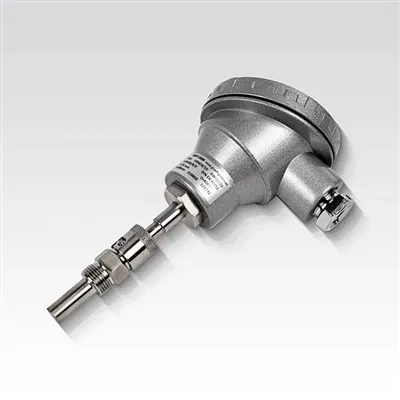
Temperature is a critical parameter in many industrial processes. Excessive heat can cause equipment to degrade rapidly, leading to premature failure. Temperature Indicator monitors the temperature of machinery, motors, and other components. By continuously tracking temperature changes, it can identify abnormal increases that may indicate a problem, such as a lubrication issue, a blocked cooling system, or an overloaded circuit.
For example, in a manufacturing plant, a temperature indicator installed on a motor can detect a gradual rise in temperature over time. This could be a sign of worn bearings or a misaligned belt. By alerting maintenance personnel early, the issue can be addressed before the motor fails, preventing costly production downtime.
Pressure Indicators
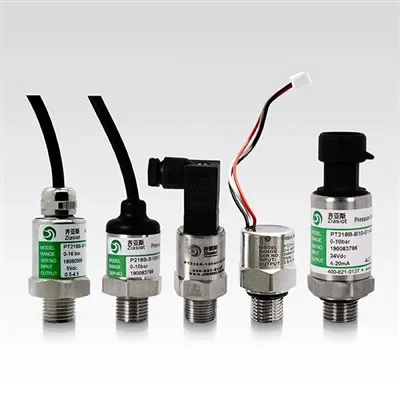
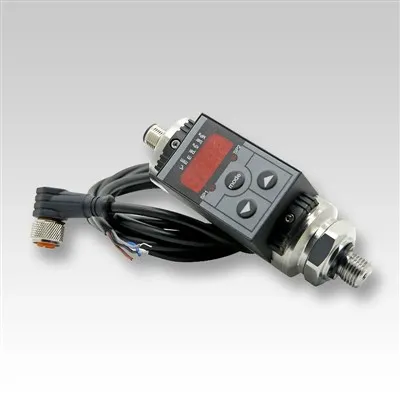
Pressure indicators, such as Digital Hydraulic Pressure Gauge, are essential for monitoring the pressure in hydraulic systems, pneumatic systems, and pipelines. Fluctuations in pressure can signal leaks, blockages, or component failures. In a hydraulic system, a sudden drop in pressure may indicate a leak in the hydraulic lines or a malfunctioning pump. By detecting these changes, maintenance teams can take corrective action to prevent system failure and avoid potential safety hazards.
The Role of Controllers in Predictive Maintenance
Controllers are used to regulate and control various processes in industrial systems. They receive input from indicators and other sensors and adjust the operation of equipment to maintain optimal conditions. In the context of predictive maintenance, controllers can play a dual role: not only ensuring the proper functioning of equipment but also providing valuable data for analysis.
Melt Pressure Controllers
Melt Pressure Controller is commonly used in plastic processing industries. It monitors and controls the pressure of molten plastic in extrusion and injection molding machines. By maintaining a stable melt pressure, it ensures the quality of the final product. Additionally, the data collected by the melt pressure controller can be analyzed to detect trends and anomalies. For example, a gradual increase in melt pressure over time may indicate a build - up of material in the machine, which could lead to clogging and reduced efficiency. By analyzing this data, maintenance teams can schedule cleaning or maintenance operations to prevent production disruptions.
PID Controllers
Proportional - Integral - Derivative (PID) controllers are widely used in industrial automation to regulate temperature, pressure, flow, and other variables. They continuously compare the actual value of a process variable with a setpoint and adjust the output to minimize the error. In predictive maintenance, PID controllers can provide insights into the performance of equipment. For instance, if a PID controller is constantly making large adjustments to maintain the setpoint, it may indicate that the equipment is not operating efficiently or that there is a problem with the control loop. By analyzing the control actions of the PID controller, maintenance teams can identify potential issues and take preventive measures.
Data Collection and Analysis
Indicators and controllers generate a vast amount of data about the operation of industrial equipment. This data is the foundation of predictive maintenance. By collecting and analyzing this data, maintenance teams can identify patterns, trends, and anomalies that may indicate a potential failure.
Sensor Networks
In modern industrial systems, multiple indicators and controllers are often connected to form a sensor network. This network allows for comprehensive monitoring of equipment and processes. For example, a manufacturing facility may have temperature indicators, pressure indicators, and vibration sensors installed on a production line. By integrating the data from these sensors, a more complete picture of the equipment's condition can be obtained.
Data Analytics Tools
To make sense of the large volume of data generated by indicators and controllers, advanced data analytics tools are used. These tools can perform statistical analysis, machine learning algorithms, and pattern recognition to identify potential issues. For example, machine learning algorithms can be trained to recognize normal operating patterns based on historical data. Any deviation from these patterns can be flagged as a potential problem, allowing maintenance teams to investigate further.
Benefits of Using Indicators and Controllers in Predictive Maintenance
Reduced Downtime
By detecting potential issues early, indicators and controllers help prevent unexpected equipment failures. This reduces the amount of unplanned downtime, which can have a significant impact on productivity and profitability. For example, in a power generation plant, a single generator failure can result in a loss of electricity production and revenue. By using indicators and controllers for predictive maintenance, the likelihood of such failures can be minimized.
Cost Savings
Predictive maintenance can lead to significant cost savings. By addressing issues before they become major problems, the need for expensive emergency repairs and replacements is reduced. Additionally, by optimizing the maintenance schedule, resources can be used more efficiently, reducing labor and material costs.
Improved Safety
Indicators and controllers can also enhance safety in industrial environments. By detecting potential hazards, such as high temperatures or abnormal pressures, they allow for timely intervention to prevent accidents. For example, in a chemical plant, a pressure indicator can detect a dangerous pressure build - up in a reactor, allowing operators to take corrective action before an explosion occurs.
Conclusion
Indicators and controllers are essential components of predictive maintenance strategies. They provide real - time information about the operation of industrial equipment, enable data - driven decision - making, and help prevent unexpected failures. As a supplier of indicators and controllers, I am committed to providing high - quality products that support the predictive maintenance needs of our customers.
If you are interested in learning more about how our indicators and controllers can support your predictive maintenance efforts, or if you have any specific requirements, please feel free to contact us for a procurement discussion. We look forward to working with you to optimize your industrial operations and reduce costs.
References
- "Predictive Maintenance for Industrial Equipment: A Review" - Journal of Industrial and Production Engineering
- "The Role of Sensors and Controllers in Predictive Maintenance" - Proceedings of the International Conference on Industrial Automation
- "Data Analytics for Predictive Maintenance in Manufacturing" - IEEE Transactions on Industrial Informatics