
How do Indicators and Controllers impact energy consumption?
Leave a message

Indicators and controllers play a crucial role in modern industrial and commercial settings, significantly influencing energy consumption. As a leading supplier of high - quality indicators and controllers, I have witnessed firsthand how these devices can either optimize energy use or lead to inefficiencies if not properly implemented. In this blog, I will delve into the ways indicators and controllers impact energy consumption and how our products can help businesses achieve better energy management.
Understanding Indicators and Controllers
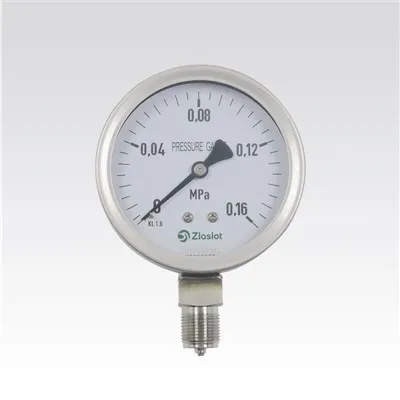
Before discussing their impact on energy consumption, it's important to understand what indicators and controllers are. Indicators are devices that provide visual or digital information about a particular parameter, such as pressure, temperature, or flow rate. For example, a Melt Pressure Indicator shows the pressure of molten materials in a manufacturing process. On the other hand, controllers are used to regulate and adjust these parameters based on pre - set values. They take the input from indicators and use it to control the operation of equipment, such as pumps, heaters, or valves.
Positive Impacts on Energy Consumption
1. Precise Monitoring and Control
One of the most significant ways indicators and controllers impact energy consumption is through precise monitoring and control. By accurately measuring parameters like temperature and pressure, indicators provide real - time data that controllers can use to make adjustments. For instance, in a heating system, a Temperature Indicator can continuously monitor the temperature of a room or a process. If the temperature goes above or below the setpoint, the controller can adjust the heating output accordingly. This prevents over - heating or under - heating, which are common causes of energy waste. In a large commercial building, this type of precise control can lead to substantial energy savings over time.
2. Automation and Energy Efficiency
Indicators and controllers enable automation, which is a key factor in improving energy efficiency. Automated systems can operate equipment only when necessary, based on the data provided by indicators. For example, in an industrial manufacturing plant, a Digital Hydraulic Pressure Gauge can monitor the pressure in a hydraulic system. If the pressure drops below a certain level, the controller can automatically start a pump to increase the pressure. This eliminates the need for manual intervention and ensures that the pump runs only when required, reducing energy consumption.


3. Load Management
Another important aspect is load management. Indicators and controllers can help distribute the load evenly across different equipment or systems. In a power grid, for example, controllers can monitor the power consumption of various industrial and commercial users. Based on the data from indicators, the controller can adjust the power supply to different users to avoid overloading the grid. This not only improves the stability of the power supply but also reduces energy waste by ensuring that power is used more efficiently.
Negative Impacts on Energy Consumption
1. Malfunctioning or Incorrectly Calibrated Devices
If indicators or controllers malfunction or are incorrectly calibrated, they can have a negative impact on energy consumption. A malfunctioning temperature indicator may provide inaccurate readings, causing the controller to make incorrect adjustments. For example, if the indicator shows a lower temperature than the actual one, the controller may keep the heating system running longer than necessary, leading to excessive energy consumption. Similarly, an incorrectly calibrated pressure controller may cause a pump to operate at a higher pressure than required, wasting energy.
2. Over - Complexity and Energy - Intensive Operation
In some cases, overly complex indicator and controller systems can consume more energy than they save. Some advanced controllers require a significant amount of power to operate, especially if they have high - end features such as touchscreens, wireless connectivity, and complex algorithms. Additionally, if the system is not properly designed or configured, it may perform unnecessary calculations or operations, leading to increased energy consumption.
Our Solutions for Energy - Efficient Operations
As a supplier of indicators and controllers, we are committed to providing products that help our customers reduce energy consumption. Our indicators are designed to be highly accurate and reliable, ensuring that the data they provide is trustworthy. This allows controllers to make precise adjustments, optimizing energy use.
We also offer a range of controllers with energy - saving features. For example, our controllers can be programmed to operate in energy - efficient modes, such as standby or sleep modes when the equipment is not in use. Additionally, our controllers are designed to be as energy - efficient as possible, with low - power consumption components and optimized algorithms.
Moreover, we provide comprehensive support and training to our customers to ensure that they can properly install, configure, and maintain our indicators and controllers. This helps prevent malfunctions and incorrect calibrations, which can lead to energy waste.
Contact Us for Energy - Saving Solutions
If you are looking to improve your energy management and reduce energy consumption, our indicators and controllers can be the ideal solution. Our team of experts is ready to assist you in selecting the right products for your specific needs. Whether you are in the industrial, commercial, or residential sector, we have the experience and expertise to help you achieve energy - efficient operations.
Contact us today to discuss your requirements and start your journey towards a more energy - efficient future.
References
- ASHRAE (American Society of Heating, Refrigerating and Air - Conditioning Engineers). Handbook of Fundamentals.
- IEEE (Institute of Electrical and Electronics Engineers). Standards for Industrial Control Systems.
- DOE (Department of Energy). Energy Efficiency Guidelines for Commercial Buildings.