
How do Indicators and Controllers communicate with each other?
Leave a message

Hey there! I'm a supplier of indicators and controllers, and I've been in this industry for quite a while. One question that often pops up is how indicators and controllers communicate with each other. It's a crucial aspect, especially for those looking to set up efficient control systems. So, let's dive right in and explore this topic.
The Basics of Indicators and Controllers
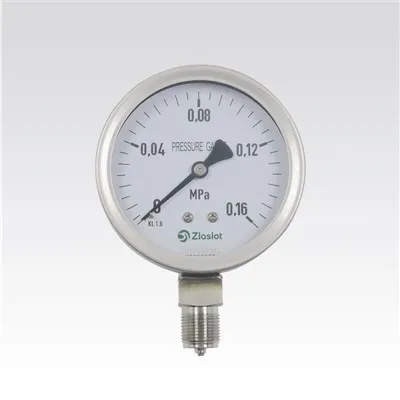
First off, let's quickly define what indicators and controllers are. Indicators are devices that show the current status or value of a particular parameter, like temperature, pressure, or flow. For example, a Temperature Indicator will display the temperature of a system. On the other hand, controllers are used to regulate and manage these parameters. A Temperature Controller can adjust the heating or cooling system to maintain a desired temperature.
Communication Methods
There are several ways indicators and controllers can communicate with each other. The choice of method depends on various factors such as the type of system, the distance between the devices, and the required level of accuracy.
Wired Communication
One of the most common ways is through wired connections. This can be done using analog or digital signals.
Analog Signals
Analog signals are continuous signals that represent the measured parameter. For example, a temperature sensor might send an analog voltage signal proportional to the temperature. The indicator can then display this value, and the controller can use it to make decisions. However, analog signals are more susceptible to noise and interference, which can affect the accuracy of the measurement.
Digital Signals
Digital signals, on the other hand, are discrete signals that represent the measured parameter in a binary format. This makes them more resistant to noise and interference. Digital communication protocols like Modbus, Profibus, and Ethernet are commonly used in industrial applications. These protocols allow for fast and reliable communication between indicators and controllers.
Wireless Communication
Wireless communication is becoming increasingly popular, especially in applications where wiring is difficult or expensive. There are several wireless technologies available, such as Wi-Fi, Bluetooth, and ZigBee.
Wi-Fi
Wi-Fi is a widely used wireless technology that offers high-speed data transfer over a relatively long distance. It's suitable for applications where real-time data monitoring and control are required. However, Wi-Fi networks can be susceptible to interference from other devices and require a stable power supply.
Bluetooth
Bluetooth is a short-range wireless technology that is commonly used for connecting devices like smartphones and tablets. It's easy to set up and consumes less power than Wi-Fi. However, the range of Bluetooth is limited, typically up to 10 meters.
ZigBee
ZigBee is a low-power wireless technology that is designed for applications where long battery life and low data rates are required. It's commonly used in home automation and industrial monitoring systems. ZigBee networks can support a large number of devices and have a relatively long range.
Communication Protocols
As mentioned earlier, digital communication protocols play a crucial role in the communication between indicators and controllers. Let's take a closer look at some of the most commonly used protocols.
Modbus
Modbus is a simple and widely used communication protocol that is commonly used in industrial automation. It allows for communication between a master device (usually a controller) and multiple slave devices (such as indicators). Modbus can be used over both wired and wireless connections.
Profibus
Profibus is a high-speed communication protocol that is commonly used in industrial applications. It offers fast data transfer rates and supports a large number of devices. Profibus can be used for both process automation and factory automation.
Ethernet
Ethernet is a widely used communication protocol that offers high-speed data transfer over a local area network (LAN). It's commonly used in industrial applications where real-time data monitoring and control are required. Ethernet can be used in combination with other protocols, such as Modbus TCP/IP, to provide a more comprehensive communication solution.
Challenges and Solutions
While there are many benefits to using indicators and controllers, there are also some challenges that need to be addressed.
Compatibility
One of the biggest challenges is ensuring compatibility between different indicators and controllers. Different devices may use different communication protocols or have different data formats. To overcome this challenge, it's important to choose devices that are compatible with each other or use a gateway device to convert between different protocols.
Security
Another challenge is ensuring the security of the communication between indicators and controllers. With the increasing use of wireless communication, there is a greater risk of unauthorized access and data breaches. To address this challenge, it's important to use secure communication protocols and implement proper security measures, such as encryption and authentication.
Maintenance
Maintaining the communication between indicators and controllers can also be a challenge. Wired connections can be damaged over time, and wireless networks can be affected by interference. Regular maintenance and monitoring are required to ensure the reliability of the communication.
Conclusion
In conclusion, the communication between indicators and controllers is a crucial aspect of any control system. There are several ways to achieve this communication, including wired and wireless methods, and different communication protocols can be used depending on the requirements of the application. While there are some challenges to overcome, with the right choice of devices and proper implementation, it's possible to set up a reliable and efficient communication system.
If you're in the market for high-quality indicators and controllers, we've got you covered. Our Temperature Controller, Pressure Temperature Indicator, and Temperature Indicator are designed to provide accurate and reliable performance. We also offer a range of communication options to ensure seamless integration with your existing system.


If you have any questions or would like to discuss your specific requirements, feel free to reach out to us. We're always happy to help you find the best solution for your needs.
References
- Dorf, R. C., & Bishop, R. H. (2016). Modern Control Systems. Pearson.
- Kuo, B. C., & Golnaraghi, F. (2017). Automatic Control Systems. Wiley.
- Oppenheim, A. V., & Schafer, R. W. (2010). Discrete-Time Signal Processing. Pearson.