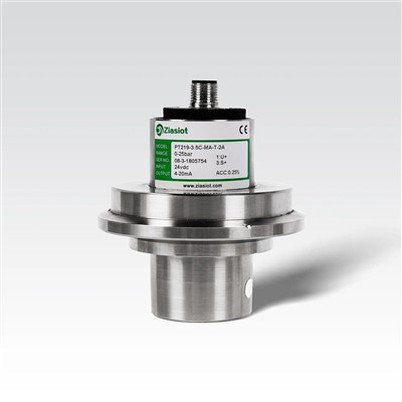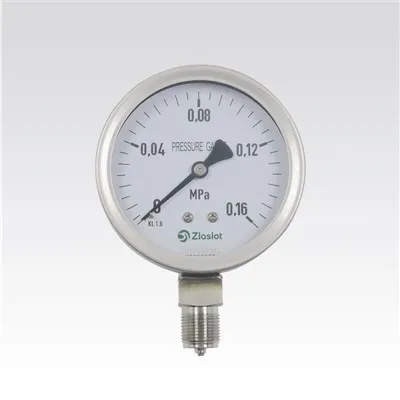

Can a Compact Pressure Transmitter measure absolute pressure?
Leave a message

Can a Compact Pressure Transmitter Measure Absolute Pressure?
In the realm of industrial instrumentation, pressure measurement is a critical aspect that impacts a wide range of applications, from manufacturing processes to environmental monitoring. Compact pressure transmitters have gained significant popularity due to their small size, high performance, and versatility. One common question that arises is whether a compact pressure transmitter can measure absolute pressure. As a supplier of compact pressure transmitters, I will delve into this topic and provide a comprehensive answer.
Understanding Pressure Measurement
Before we discuss whether a compact pressure transmitter can measure absolute pressure, it's essential to understand the different types of pressure measurements. There are three main types of pressure: gauge pressure, absolute pressure, and differential pressure.
- Gauge Pressure: This is the pressure relative to the ambient atmospheric pressure. Gauge pressure transmitters measure the pressure above or below the atmospheric pressure. For example, a tire pressure gauge measures the gauge pressure inside the tire, which is the pressure above the atmospheric pressure.
- Absolute Pressure: Absolute pressure is the total pressure, including the atmospheric pressure. It is measured relative to a perfect vacuum. Absolute pressure transmitters are used in applications where the absolute pressure needs to be known, such as in high - altitude aviation, vacuum systems, and some chemical processes.
- Differential Pressure: Differential pressure is the difference in pressure between two points. Differential pressure transmitters are commonly used in flow measurement, level measurement, and filter monitoring applications.
Can a Compact Pressure Transmitter Measure Absolute Pressure?
The answer is yes, a compact pressure transmitter can measure absolute pressure. Modern compact pressure transmitters are designed with advanced sensing technologies that allow them to measure absolute pressure accurately. These transmitters typically use a reference vacuum chamber within the sensor design.
The sensing element in an absolute pressure - measuring compact pressure transmitter is calibrated to measure the pressure relative to this internal vacuum reference. The most common sensing technologies used in these transmitters are piezoresistive and capacitive sensors.
- Piezoresistive Sensors: Piezoresistive sensors work based on the principle that the resistance of a material changes when it is subjected to mechanical stress. In a piezoresistive absolute pressure transmitter, the pressure acts on a diaphragm, which deforms. This deformation causes a change in the resistance of the piezoresistive elements on the diaphragm. The change in resistance is then converted into an electrical signal proportional to the absolute pressure.
- Capacitive Sensors: Capacitive sensors measure pressure by detecting changes in capacitance. The pressure acts on a diaphragm, which changes the distance between two capacitor plates. This change in distance results in a change in capacitance, which is then converted into an electrical signal representing the absolute pressure.
Advantages of Using a Compact Pressure Transmitter for Absolute Pressure Measurement
There are several advantages to using a compact pressure transmitter for absolute pressure measurement:
- Space - Saving: As the name suggests, compact pressure transmitters are small in size. This makes them ideal for applications where space is limited, such as in compact machinery, portable devices, and installations with tight constraints.
- Cost - Effective: Compact pressure transmitters are generally more cost - effective than larger, more traditional pressure measurement devices. They require less material and are often easier to install, which can result in lower overall costs.
- High Performance: Despite their small size, modern compact pressure transmitters offer high accuracy, excellent repeatability, and a wide operating temperature range. They can provide reliable absolute pressure measurements in various industrial environments.
- Easy Integration: Compact pressure transmitters can be easily integrated into existing systems. They are available with a variety of output signals, such as 4 - 20 mA, 0 - 5 V, and 0 - 10 V, which can be easily interfaced with control systems, data loggers, and other instrumentation.
Applications of Compact Pressure Transmitters for Absolute Pressure Measurement
Compact pressure transmitters for absolute pressure measurement are used in a wide range of applications:


- Aerospace and Aviation: In aircraft, absolute pressure measurement is crucial for altitude sensing, airspeed calculation, and cabin pressure control. Compact pressure transmitters are used due to their lightweight and space - saving design.
- Vacuum Systems: In vacuum applications, such as in semiconductor manufacturing, vacuum furnaces, and scientific research, absolute pressure measurement is necessary to ensure proper operation. Compact pressure transmitters can accurately measure the low absolute pressures in these systems.
- Environmental Monitoring: Compact pressure transmitters can be used in environmental monitoring stations to measure barometric pressure, which is an important parameter for weather forecasting and climate studies.
- Medical Devices: In medical applications, such as ventilators and anesthesia machines, absolute pressure measurement is required for proper patient care. Compact pressure transmitters can be integrated into these devices due to their small size and high performance.
Considerations When Choosing a Compact Pressure Transmitter for Absolute Pressure Measurement
When choosing a compact pressure transmitter for absolute pressure measurement, there are several factors to consider:
- Accuracy: The accuracy of the pressure transmitter is a critical factor. It is important to choose a transmitter with an accuracy that meets the requirements of your application. The accuracy is usually specified as a percentage of the full - scale output.
- Range: The pressure range of the transmitter should match the expected pressure in your application. Make sure to choose a transmitter with a range that is appropriate for your specific needs.
- Temperature Range: The operating temperature range of the transmitter is also important. Some applications may require the transmitter to operate in extreme temperature conditions. Choose a transmitter that can withstand the temperature range of your application.
- Output Signal: Consider the output signal of the transmitter. Different control systems and instrumentation may require different output signals. Common output signals include 4 - 20 mA, 0 - 5 V, and 0 - 10 V.
Our Product Offerings
As a supplier of compact pressure transmitters, we offer a wide range of products for absolute pressure measurement. Our Pressure Transmitters are designed with the latest sensing technologies to provide accurate and reliable absolute pressure measurements. We also offer Sanitary Pressure Transmitter for applications where hygiene is a concern, such as in the food and beverage industry and pharmaceutical manufacturing. Additionally, our Pressure Indicator Transmitter combines pressure measurement with a visual indicator, providing both a local display and an electrical output signal.
Conclusion
In conclusion, a compact pressure transmitter can indeed measure absolute pressure. With their advanced sensing technologies, space - saving design, and high performance, they are a viable option for a wide range of applications that require accurate absolute pressure measurement. Whether you are in the aerospace, vacuum, environmental monitoring, or medical industry, a compact pressure transmitter can provide the reliable absolute pressure measurements you need.
If you are interested in learning more about our compact pressure transmitters for absolute pressure measurement or have specific requirements for your application, we encourage you to contact us for a detailed discussion. Our team of experts is ready to assist you in selecting the right product for your needs and to support you throughout the procurement process.
References
- "Pressure Measurement Principles" by John O. Wouters.
- "Industrial Instrumentation and Control Systems" by David A. Bell.
- Technical documentation from leading pressure transmitter manufacturers.