Are there any special installation tools required for a Vortex Intelligent Flowmeter?
Leave a message

Are there any special installation tools required for a Vortex Intelligent Flowmeter?
As a supplier of Vortex Intelligent Flowmeters, I often get asked about the installation process and whether there are any special tools needed. In this blog post, I'll dive deep into this topic to provide you with a comprehensive understanding.
Understanding the Vortex Intelligent Flowmeter
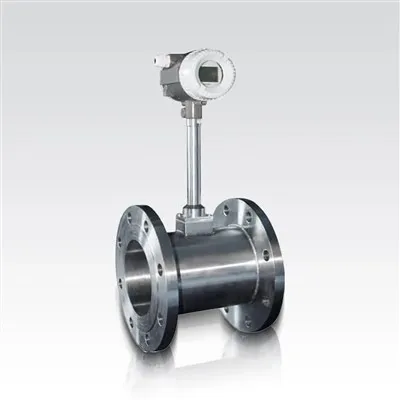
Before we discuss the installation tools, let's briefly understand what a Vortex Intelligent Flowmeter is. A Vortex Flowmeter is a type of flow measurement device that operates on the principle of the von Kármán vortex street. When a fluid flows past a bluff body (a non - streamlined object) placed in the flow path, vortices are shed alternately on either side of the bluff body. The frequency of these vortex shedding is directly proportional to the fluid velocity, allowing for accurate flow measurement.
These flowmeters are widely used in various industries such as oil and gas, chemical processing, and power generation due to their high accuracy, wide turndown ratio, and low maintenance requirements.
General Installation Requirements
The installation of a Vortex Intelligent Flowmeter typically follows a set of general requirements to ensure accurate and reliable operation. First, the flowmeter should be installed in a straight section of the pipeline. Upstream and downstream straight pipe lengths are crucial to ensure a fully developed flow profile. Generally, a minimum of 15 - 20 pipe diameters of straight pipe upstream and 5 - 10 pipe diameters downstream of the flowmeter are recommended.
The flowmeter should also be installed in a location where it is not exposed to excessive vibration or mechanical shock, as this can affect the accuracy of the measurement. Additionally, proper grounding is essential to prevent electrical interference.
Tools for Installation
1. Pipe Wrenches
Pipe wrenches are one of the most basic and essential tools for installing a Vortex Intelligent Flowmeter. They are used to tighten and loosen the pipe fittings. Depending on the size of the pipeline, different sizes of pipe wrenches may be required. For smaller pipelines (e.g., 1 - 2 inches in diameter), a 10 - 12 - inch pipe wrench may be sufficient. For larger pipelines (e.g., 4 - 6 inches or more), 18 - 24 - inch pipe wrenches are typically needed.
2. Thread Sealant
When installing the flowmeter, it is important to ensure a leak - free connection between the flowmeter and the pipeline. Thread sealant, such as Teflon tape or pipe dope, is used to seal the threaded connections. Teflon tape is easy to use; you simply wrap it around the male threads of the pipe fitting before making the connection. Pipe dope, on the other hand, is a paste - like substance that is applied to the threads for a more secure and long - lasting seal.
3. Welding Equipment (if applicable)
In some cases, especially for larger pipelines or in applications where a welded connection is required, welding equipment may be necessary. This includes a welding machine, welding rods, and appropriate safety gear such as welding helmets, gloves, and aprons. Welding should be carried out by a qualified welder to ensure a strong and leak - free joint.


4. Level
A level is used to ensure that the flowmeter is installed horizontally or vertically, depending on the manufacturer's recommendations. This is important because an incorrectly aligned flowmeter can lead to inaccurate flow measurements. A simple bubble level can be used for this purpose.
5. Electrical Tools
Since a Vortex Intelligent Flowmeter is an electronic device, electrical tools are needed for wiring and grounding. These tools include wire strippers, screwdrivers for terminal blocks, and a multimeter for testing electrical connections. A multimeter can be used to check for proper voltage, resistance, and continuity in the electrical circuit.
6. Torque Wrench
A torque wrench is used to tighten the bolts and nuts on the flanges of the flowmeter to the specified torque value. Over - tightening or under - tightening the bolts can lead to leaks or damage to the flowmeter. The torque value is usually specified by the manufacturer in the installation manual.
Special Considerations and Optional Tools
1. Pipe Cutting Tools
If the pipeline needs to be modified or sized to fit the flowmeter, pipe cutting tools such as a pipe cutter or a hacksaw may be required. A pipe cutter is a more precise tool for cutting pipes, especially for smaller - diameter pipes. A hacksaw can be used for larger pipes or in situations where a pipe cutter is not available.
2. Pipe Alignment Tools
In some installations, it may be necessary to ensure that the pipeline is properly aligned with the flowmeter. Pipe alignment tools, such as alignment clamps or laser alignment devices, can be used to achieve this. These tools help to ensure that the flowmeter is installed in the correct position and orientation within the pipeline.
Comparison with Other Flowmeters
It's interesting to compare the installation tool requirements of a Vortex Intelligent Flowmeter with other types of flowmeters. For example, a Turbine Flow Meter may require similar basic tools such as pipe wrenches and thread sealant. However, due to the presence of moving parts in a turbine flow meter, more care may be needed during installation to avoid damage to the turbine blades.
On the other hand, an LDG Electromagnetic Flowmeter also requires electrical tools for wiring, but its installation may be less sensitive to vibration compared to a Vortex Intelligent Flowmeter. The installation of an electromagnetic flowmeter also requires proper grounding to ensure accurate measurement.
Conclusion
In conclusion, while there are no extremely specialized tools required for the installation of a Vortex Intelligent Flowmeter, a set of basic and some optional tools are needed to ensure a proper and accurate installation. These tools include pipe wrenches, thread sealant, welding equipment (if applicable), levels, electrical tools, torque wrenches, and in some cases, pipe cutting and alignment tools.
If you are considering purchasing a Vortex Intelligent Flowmeter for your application, and you have any questions about the installation process or the tools required, feel free to contact us. Our team of experts is ready to assist you with all aspects of flowmeter selection, installation, and maintenance. Whether you are a small - scale user or a large industrial enterprise, we can provide you with the best solutions for your flow measurement needs.
References
- Manufacturer's installation manuals for Vortex Intelligent Flowmeters
- Industry standards and guidelines for flowmeter installation