
What is the Difference Between Radar and Ultrasonic Level Sensor
Leave a message
Level transmitters are widely used in the chemical, oil, pharmaceutical, and water treatment industries to measure and monitor the level of various liquids. Ziasiot non-contact level transmitters include radar and ultrasonic level transmitters, here shows their each characteristics that make them suitable for different applications. Understanding these differences is crucial for choosing the right sensor for specific industrial needs.
Working Principle
Radar level sensors adopt frequency modulation continuous wave (FMCW) technology. The antenna emits high-frequency FM radar signals, and the radar signal frequency increases linearly. The same antenna receives the transmitted radar signal after being reflected by the measured medium. At the same time, the frequency difference between the transmitted signal frequency and the received signal frequency is proportional to the measured distance. The collected frequency difference signal obtains the frequency spectrum of the reflected echo by the fast Fourier transform (FFT), and thus calculates the distance of the target to be measured.
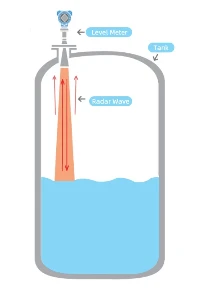
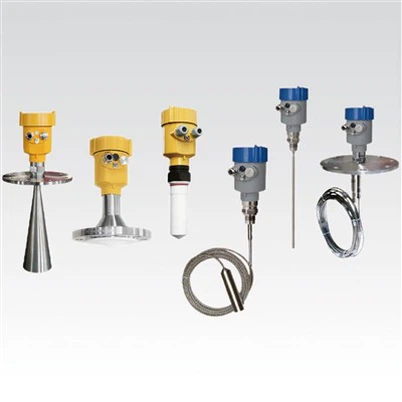
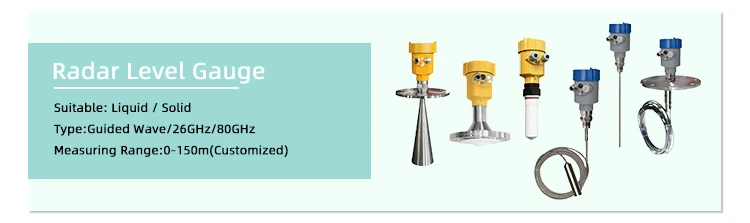
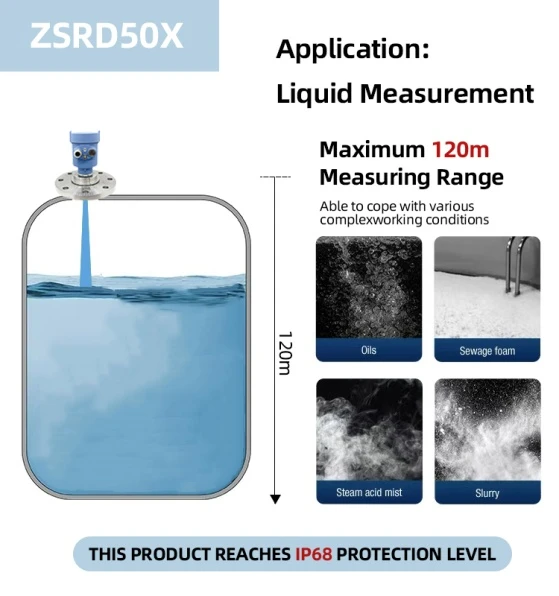
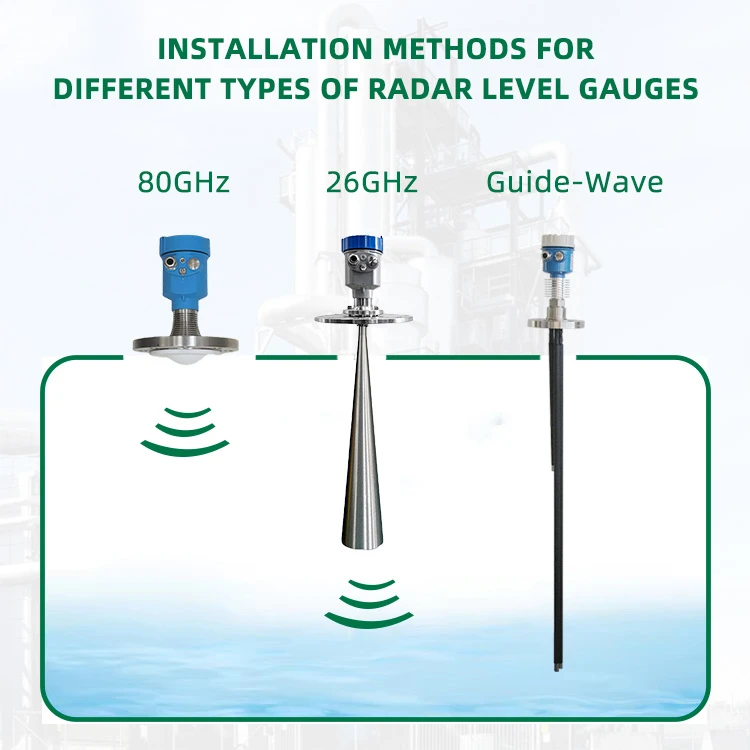
Ziasiot radar level sensors include 26GHz and 80GHz radar level sensors and guided wave radar level sensors
Features:
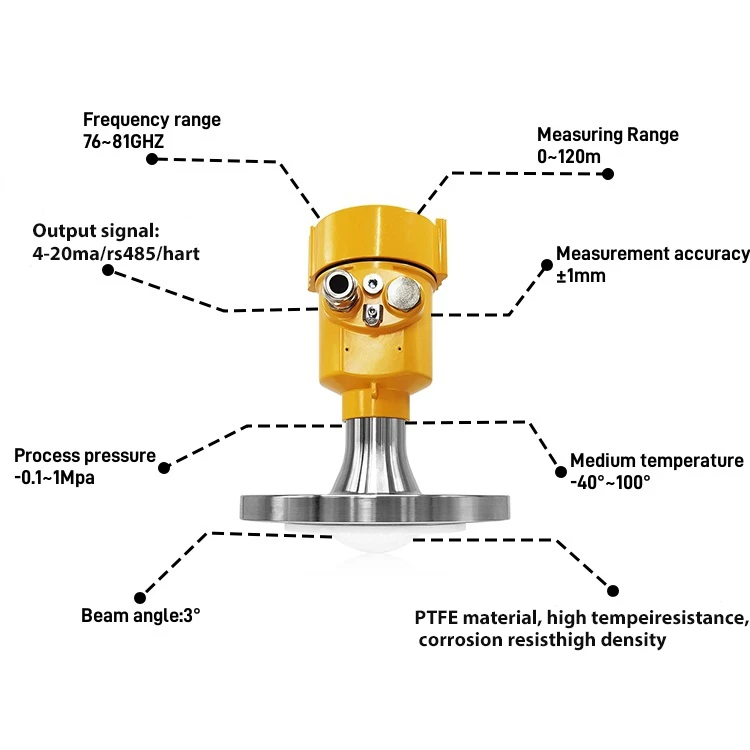
1. Can measure corrosive liquids, with PTFE flat surface, can fully prevent corrosion
2.Protection level is IP68, pressure resistance can reach 0.1-1Mpa, temperature resistance can reach 100 degrees
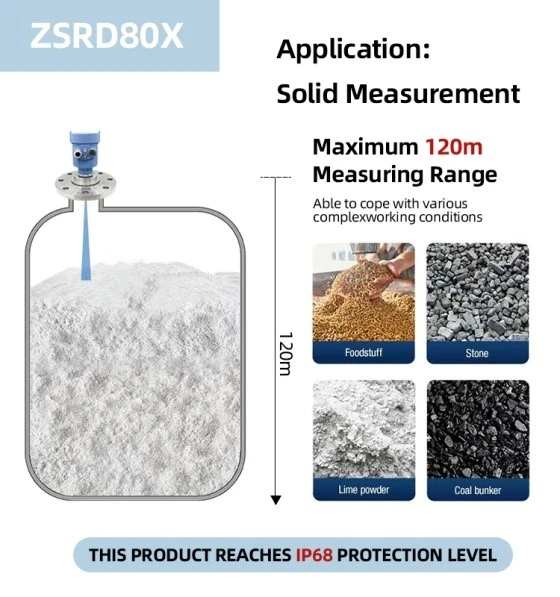
3. Measuring range can reach 120 meters, flange connection, housing can choose stainless steel & cast aluminum
4. Customizable output signal, RS485 & 4-20mA can be selected. Customizable Bluetooth function
5. Flange connection, flange size can be customized.
6. Customizable surface film nameplate.
Ultrasonic level sensors, on the other hand, work by using sound waves. They emit high-frequency ultrasonic waves (above the human-audible range, usually in the range of 20 kHz to 200 kHz) towards the surface of the liquid or solid. These waves travel through the air and bounce back when they hit the surface. The sensor measures the time it takes for the ultrasonic waves to travel from the transmitter to the surface and back to the receiver. Similar to radar sensors, the distance to the surface is calculated based on the speed of sound in the air and the round-trip time of the waves. For example, in an ultrasonic water level sensor, sound waves are used to measure the water level in a reservoir or a water tank.
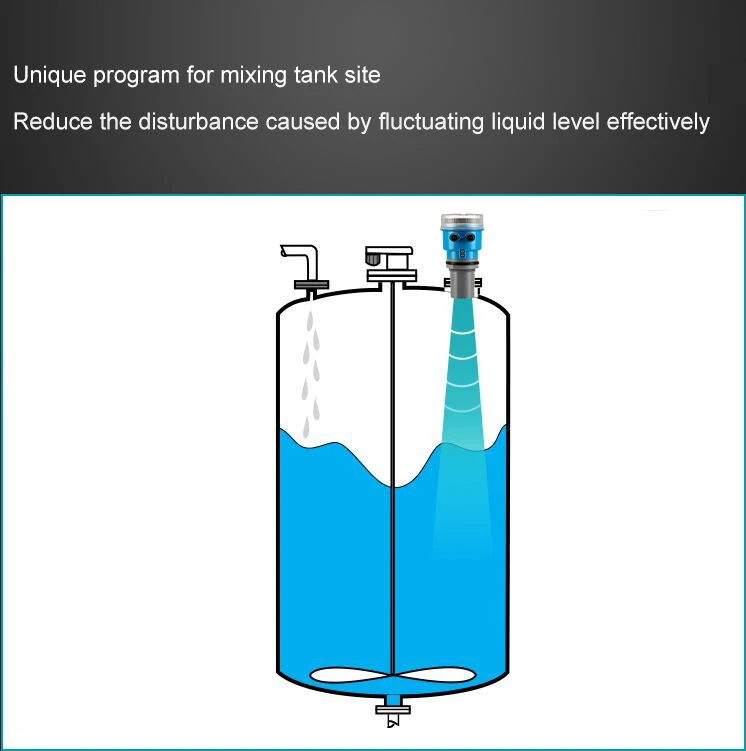
Ziasiot ultrasonic level sensor is a non-contact, high reliability, cost-effective, easy-to-install, and maintain on-site measurement device.It is easy to operate, with on-site display, and optional output signals like analog, switch, and RS485 to meet various applications. The housing shell can be made of die-cast aluminum, and the protection grade can be IP67. It applies to the measurement of liquids and slurry and it is widely used in water treatment, municipal, chemical, metallurgy, machinery manufacturing, and other industries.
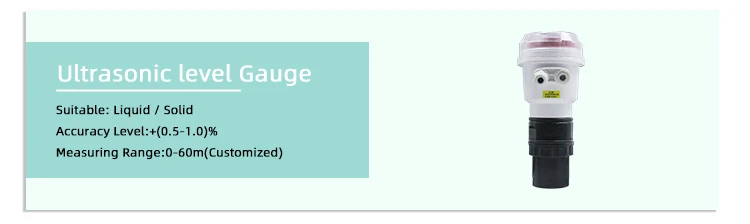
Features
♦ Switch in both Chinese and English, Chinese and English display, simple operation, easy setting
♦ Wide range, the max. range can reach 70m
♦ Humanized design, can be shown distance(ullage) and level at the same time
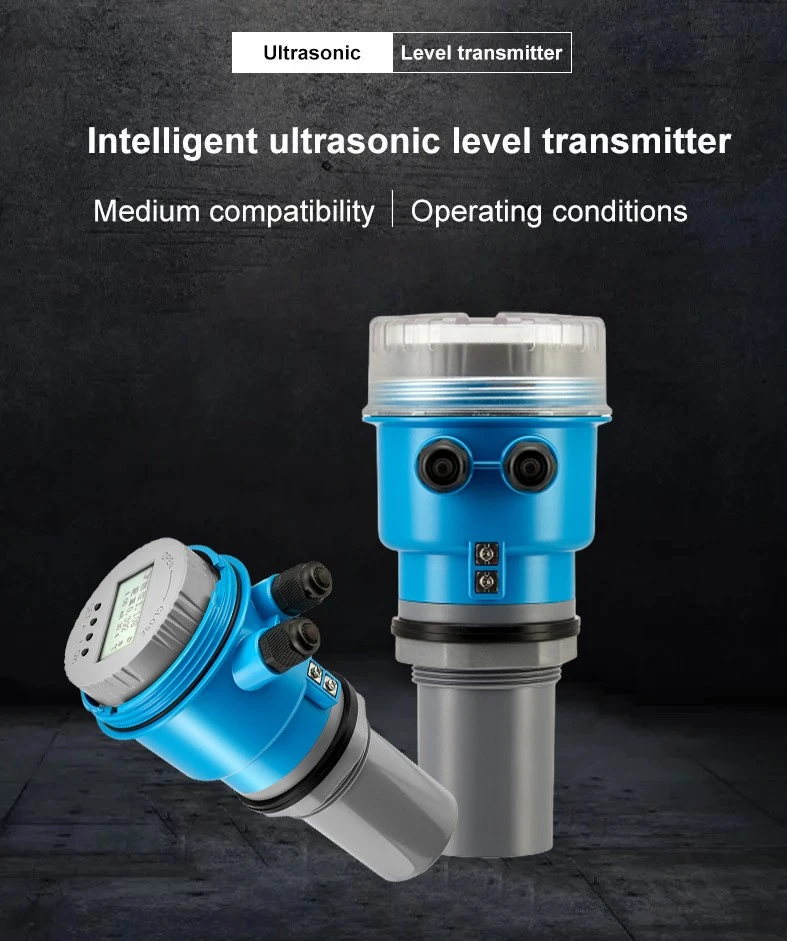
Radar vs. Ultrasonic Level Sensors
|
Feature |
Radar Level Sensor |
Ultrasonic Level Sensor |
|
Technology |
Uses microwave (radio waves) |
Uses high-frequency sound waves |
|
Measurement Range |
Long-range (up to 100m or more) |
Short to medium-range (typically up to 15m) |
|
Accuracy |
High (mm to cm accuracy) |
Moderate (cm-level accuracy) |
|
Environmental Impact |
Unaffected by dust, vapor, temperature, or pressure |
Affected by air density, dust, and vapor |
|
Material Compatibility |
Works with liquids, solids, and harsh chemicals |
Best for liquids and some solids |
|
Foam & Vapor Resistance |
Excellent (penetrates foam/vapor) |
Poor (sound waves can be absorbed/scattered) |
|
Cost |
Higher (premium performance) |
Lower (cost-effective for simple applications) |
|
Installation |
Requires proper antenna alignment |
Needs clear path, no obstructions |
|
Applications |
Chemical tanks, bulk solids, LNG, high-temperature |
Water treatment, fuel tanks, open reservoirs |
Key Differences
Wave Type
Radar uses microwaves, ultrasonic uses sound waves.
01
Range & Accuracy
Radar is better for long distances and high precision.
02
Environment
Radar works in harsh conditions; ultrasonic is cheaper but sensitive to air changes.
03
Cost
Ultrasonic is more budget-friendly for simple uses.
04
Applications of Radar Level Sensors vs. Ultrasonic Level Sensors
Both radar and ultrasonic level sensors are widely used in industrial and commercial applications, but their suitability depends on factors like measurement range, environmental conditions, and material properties. Below is a breakdown of their typical applications:
1. Radar Level Sensor Applications
Radar sensors use microwave signals and are ideal for challenging environments where accuracy and reliability are critical.
Common Uses
✔ Oil & Gas Industry
Storage tanks (crude oil, LNG, LPG)
Refinery process vessels
High-pressure & high-temperature applications
✔ Chemical & Petrochemical
Aggressive chemicals (acids, solvents)
Foaming liquids (due to radar's ability to penetrate vapor/foam)
✔ Bulk Solids & Silos
Grain, cement, coal, plastic pellets
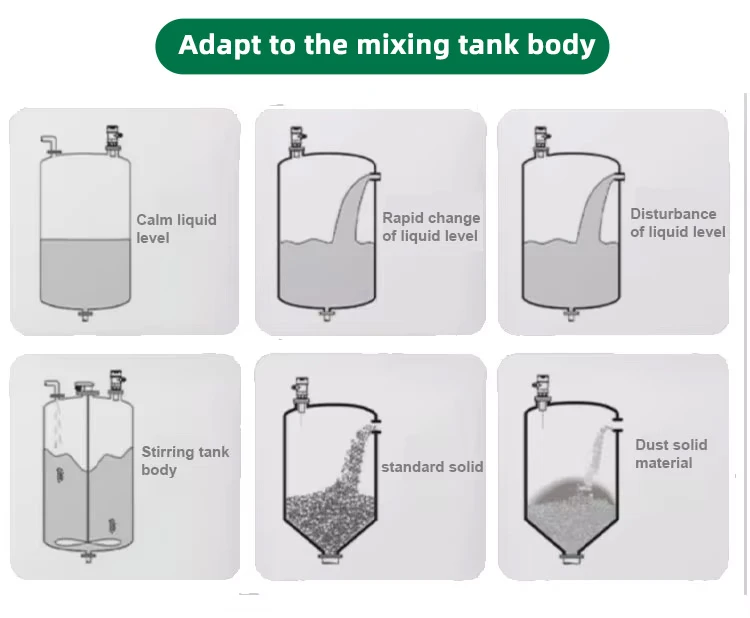
Dusty environments (radar is unaffected by dust)
✔ Water & Wastewater
Large reservoirs, sewage tanks
Applications with surface turbulence
✔ Food & Beverage
Sugar silos, milk tanks, edible oil storage
Hygienic environments (with special antenna designs)
✔ Pharmaceutical
Liquid medicine storage
Sterile & high-purity processes
Advantages in These Applications:
✅ Works in extreme temperatures (-200°C to +400°C)
✅ Unaffected by dust, steam, or pressure changes
✅ High accuracy (±1mm to ±5mm)
2. Ultrasonic Level Sensor Applications
Ultrasonic sensors use sound waves and are cost-effective for non-contact measurements in less harsh conditions.

Common Uses
✔ Water & Wastewater Treatment
Open channel flow monitoring
Sewage tanks, rainwater collection
✔ Fuel & Liquid Storage
Diesel tanks, underground fuel storage
Non-corrosive liquid level monitoring
✔ Food & Beverage
Beverage bottling lines
Milk, juice, and water storage tanks
✔ HVAC & Cooling Systems
Chiller tanks, cooling towers
Hydronic systems
✔ River & Reservoir Monitoring
Flood warning systems
Irrigation control
✔ Bulk Solids (Limited Use)
Low-dust applications (plastic granules, powders)
Advantages in These Applications:
✅ Lower cost compared to radar
✅ Easy installation (no contact with medium)
✅ Suitable for non-hazardous environments
When to Choose Radar vs. Ultrasonic Level Sensor?
|
Scenario |
Radar Sensor |
Ultrasonic Sensor |
|
High-temperature liquids |
✔ |
✖ (limited range) |
|
Foaming/vapor-filled tanks |
✔ |
✖ (signal loss) |
|
Long-range measurements (>15m) |
✔ |
✖ |
|
Dusty or foggy environments |
✔ |
✖ (signal scatter) |
|
Corrosive/aggressive chemicals |
✔ |
✖ (limited materials) |
|
Budget-friendly, simple liquids |
✖ |
✔ |
|
Outdoor water monitoring |
✖ (overkill) |
✔ |
Conclusion
Radar is best for harsh, high-precision, long-range applications.
Ultrasonic is ideal for cost-sensitive, short-range, non-extreme conditions.