
What is the self - heating effect of MEMS pressure transmitters?
Leave a message

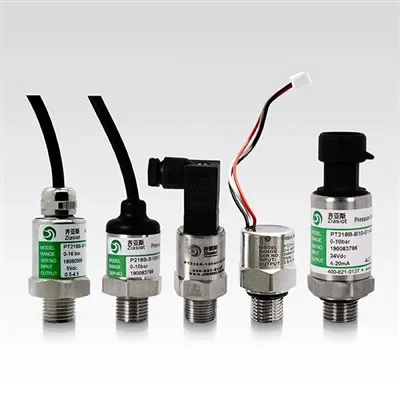
The self-heating effect of MEMS (Micro-Electro-Mechanical Systems) pressure transmitters is a critical topic that demands our attention, especially for those in the industry. As a supplier of MEMS Pressure Transmitters, I've witnessed firsthand the impact of this phenomenon on the performance and reliability of these devices. In this blog, I'll delve into what the self-heating effect is, its causes, consequences, and how we can mitigate it.
What is the Self-Heating Effect?
The self-heating effect in MEMS pressure transmitters refers to the temperature rise within the device due to the electrical power dissipation. When an electrical current passes through the various components of the pressure transmitter, such as the sensing element and signal conditioning circuits, a certain amount of electrical energy is converted into heat. This heat generation is an inherent characteristic of any electrical device and is governed by Joule's law, which states that the power dissipated (P) in a resistor is proportional to the square of the current (I) flowing through it and the resistance (R) of the resistor, i.e., P = I²R.
In MEMS pressure transmitters, the sensing element is often a piezoresistive or capacitive structure. Piezoresistive sensors rely on the change in resistance of a material under mechanical stress to measure pressure. When a current is passed through the piezoresistive elements, heat is generated, leading to a temperature rise. Capacitive sensors, on the other hand, measure pressure by detecting changes in capacitance. However, the associated signal conditioning circuits also consume power and contribute to self-heating.

Causes of Self-Heating
There are several factors that contribute to the self-heating effect in MEMS pressure transmitters. One of the primary causes is the electrical power consumption of the device. Higher power consumption means more energy is being converted into heat. This can be influenced by the design of the circuit, the operating voltage, and the current requirements of the components.
The resistance of the electrical paths within the transmitter also plays a significant role. Components with higher resistance will dissipate more heat for a given current. Additionally, the thermal conductivity of the materials used in the device affects how efficiently the generated heat can be transferred away. If the thermal conductivity is low, the heat will accumulate within the device, leading to a higher temperature rise.
The operating environment can also exacerbate the self-heating effect. High ambient temperatures reduce the temperature difference between the device and its surroundings, making it more difficult for the heat to dissipate. Moreover, if the device is installed in an enclosed or poorly ventilated space, the heat will be trapped, further increasing the temperature.
Consequences of Self-Heating
The self-heating effect can have several detrimental consequences on the performance and reliability of MEMS pressure transmitters. One of the most significant impacts is on the accuracy of the pressure measurement. Both piezoresistive and capacitive sensors are temperature-sensitive. A temperature rise due to self-heating can cause changes in the electrical properties of the sensing elements, leading to measurement errors. For example, in piezoresistive sensors, the resistance of the piezoresistors changes with temperature, which can result in a shift in the output signal.
Self-heating can also affect the long-term reliability of the device. High temperatures can accelerate the aging process of the materials, leading to degradation of the electrical and mechanical properties. This can result in reduced lifespan, increased failure rates, and potential safety hazards.
In addition, the self-heating effect can cause thermal stress within the device. Different materials expand and contract at different rates with temperature changes. This can lead to mechanical stress, which may cause cracking or delamination of the components, further compromising the performance and reliability of the pressure transmitter.
Mitigation Strategies
As a supplier of MEMS Pressure Transmitters, we've developed several strategies to mitigate the self-heating effect. One approach is to optimize the circuit design to reduce power consumption. This can involve using low-power components, reducing the operating voltage, and implementing power management techniques such as sleep modes.
Improving the thermal management of the device is also crucial. We use materials with high thermal conductivity to enhance heat transfer. For example, we incorporate heat sinks and thermal vias into the design to dissipate the heat more effectively. Additionally, we ensure proper ventilation and cooling in the installation environment to prevent heat accumulation.
Calibration is another important aspect. By accurately measuring the temperature of the device and compensating for the temperature-induced errors, we can improve the accuracy of the pressure measurement. Our calibration processes take into account the self-heating effect and ensure that the transmitters provide reliable and accurate measurements over a wide range of operating conditions.
Application in Shield Tunneling Machines
MEMS pressure transmitters are widely used in shield tunneling machines, where accurate pressure measurement is essential for safe and efficient operation. The MEMS Pressure Sensor for Shield Tunneling Machine is specifically designed to withstand the harsh conditions in tunneling environments. However, the self-heating effect can still pose challenges in these applications.
In shield tunneling machines, the pressure transmitters are often exposed to high ambient temperatures, vibration, and mechanical shock. The self-heating effect can be exacerbated by these conditions, leading to potential measurement errors and reliability issues. Our MEMS pressure sensors for shield tunneling machines are engineered with advanced thermal management techniques to minimize the impact of self-heating. They are also ruggedized to withstand the harsh operating conditions, ensuring accurate and reliable pressure measurement throughout the tunneling process.
Conclusion
The self-heating effect is a significant concern in MEMS pressure transmitters, but with proper design, thermal management, and calibration, we can effectively mitigate its impact. As a supplier, we are committed to providing high-quality MEMS Pressure Transmitters that offer accurate and reliable performance in a wide range of applications.
If you're in need of MEMS pressure transmitters for your project, whether it's for shield tunneling machines or other industrial applications, I encourage you to reach out to us for a consultation. We can provide you with detailed information about our products, their performance specifications, and how we address the self-heating effect. Let's work together to ensure the success of your project with our reliable and accurate MEMS pressure transmitters.
References
- Smith, J. (2018). Fundamentals of MEMS Pressure Sensors. Springer.
- Jones, A. (2019). Thermal Management in Microelectronic Devices. Wiley.
- Brown, C. (2020). Pressure Measurement in Harsh Environments. Elsevier.