What is the linearity of ceramic pressure transmitters?
Leave a message

As a supplier of Ceramic Pressure Transmitters, I've often been asked about the linearity of these devices. Linearity is a fundamental characteristic that significantly impacts the performance and reliability of ceramic pressure transmitters. In this blog, we'll delve into what linearity means in the context of ceramic pressure transmitters, why it matters, and how it affects various applications.
Understanding Linearity in Ceramic Pressure Transmitters
Linearity refers to the relationship between the input (pressure) and the output (electrical signal) of a pressure transmitter. In an ideal linear system, the output changes in direct proportion to the input. For ceramic pressure transmitters, this means that as the pressure applied to the sensor increases or decreases, the electrical signal produced by the transmitter should change in a perfectly straight - line fashion.
Mathematically, a linear relationship can be expressed as (y = mx + b), where (y) is the output signal, (x) is the input pressure, (m) is the slope (sensitivity), and (b) is the intercept. In the case of a pressure transmitter, (b) is often zero or close to it, and (m) represents how much the output changes for a given change in pressure.
However, in real - world scenarios, achieving perfect linearity is challenging. There are always some deviations from the ideal linear relationship. These deviations are typically measured and specified as a percentage of the full - scale output (FSO). For example, a pressure transmitter with a linearity specification of ±0.1% FSO means that the actual output signal may deviate from the ideal linear output by no more than 0.1% of the maximum output value across the entire pressure range.
Why Linearity Matters
Accuracy
One of the primary reasons why linearity is crucial is its direct impact on accuracy. In applications where precise pressure measurements are required, such as in industrial process control, medical equipment, and aerospace, even small deviations from linearity can lead to significant errors. For instance, in a chemical processing plant, inaccurate pressure measurements due to poor linearity can result in incorrect dosing of chemicals, leading to sub - optimal product quality or even safety hazards.
Calibration
Good linearity simplifies the calibration process. Calibration is the process of adjusting the transmitter's output to match a known pressure input. When a pressure transmitter has high linearity, it is easier to calibrate because the relationship between the input and output is more predictable. This reduces the time and cost associated with calibration and ensures that the transmitter maintains its accuracy over time.
Signal Processing
In modern pressure measurement systems, the output signal from the transmitter is often processed by microcontrollers or other electronic devices. A linear output signal is easier to process and interpret compared to a non - linear one. This simplifies the design of the signal processing circuitry and reduces the complexity of the algorithms used to convert the raw signal into a meaningful pressure value.
Factors Affecting Linearity
Material Properties
The ceramic material used in the pressure sensor plays a significant role in determining its linearity. Different ceramic materials have different mechanical and electrical properties, which can affect how the sensor responds to pressure changes. For example, the elasticity of the ceramic material can cause non - linear deformation under pressure, leading to deviations from the ideal linear relationship.
Manufacturing Processes
The manufacturing process of the ceramic pressure transmitter also has a profound impact on its linearity. Any inconsistencies in the fabrication of the sensor, such as variations in the thickness of the ceramic diaphragm or the quality of the bonding between the diaphragm and the base, can introduce non - linearities. High - precision manufacturing techniques are required to minimize these variations and ensure good linearity.
Temperature
Temperature is another important factor that can affect the linearity of a ceramic pressure transmitter. Changes in temperature can cause the ceramic material to expand or contract, which can alter the mechanical properties of the sensor and introduce non - linearities in the output signal. To mitigate this effect, many ceramic pressure transmitters are equipped with temperature compensation circuits that adjust the output signal to account for temperature variations.
Applications and Linearity Requirements
Industrial Process Control
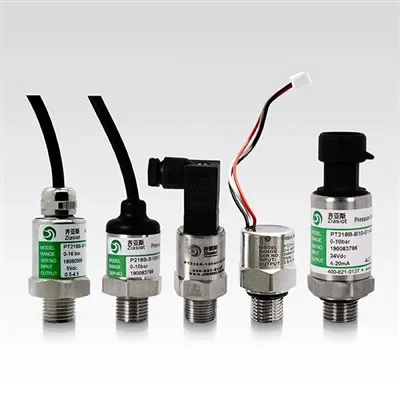
In industrial process control applications, such as in the oil and gas, chemical, and food and beverage industries, high linearity is essential. These industries rely on accurate pressure measurements to ensure the safe and efficient operation of their processes. For example, in a pipeline monitoring system, a pressure transmitter with good linearity is needed to accurately detect any pressure drops or surges, which could indicate a leak or a blockage. Our Standard Ceramic Pressure Transmitter is designed to meet the high - linearity requirements of these industrial applications.
Refrigeration Systems
Refrigeration systems require precise pressure measurements to maintain optimal performance. The pressure in the refrigerant circuit affects the efficiency of the compressor, the heat transfer rate in the evaporator and condenser, and the overall cooling capacity of the system. A Refrigeration Pressure Transmitter with high linearity ensures accurate pressure monitoring, which is crucial for energy efficiency and the longevity of the refrigeration equipment.
Medical Applications
In medical applications, such as blood pressure monitoring and ventilator systems, the linearity of the pressure transmitter is of utmost importance. Accurate pressure measurements are essential for diagnosing and treating patients. A non - linear pressure transmitter could lead to incorrect blood pressure readings or improper ventilation settings, which could have serious consequences for the patient's health. Our ceramic pressure transmitters are designed to meet the strict linearity requirements of these medical applications, providing reliable and accurate pressure measurements.
Anti - Corrosive Environments
In environments where the pressure transmitter is exposed to corrosive substances, such as in the chemical industry or marine applications, the linearity of the transmitter can be affected by corrosion. Our Anti - Crossive Pressure Transmitter is specifically designed to resist corrosion while maintaining high linearity. The use of corrosion - resistant ceramic materials and protective coatings ensures that the transmitter can operate reliably in harsh environments without sacrificing its linearity and accuracy.
Measuring and Specifying Linearity
To measure the linearity of a ceramic pressure transmitter, a series of pressure points are applied across the full - scale range of the transmitter, and the corresponding output signals are recorded. The ideal linear output for each pressure point is calculated based on the known sensitivity of the transmitter. The deviations between the actual and ideal output signals are then measured and plotted as a function of pressure.


The most common method of specifying linearity is the best - fit straight - line (BFSL) method. In this method, a straight line is fitted to the actual output data points using a least - squares regression algorithm. The maximum deviation of the actual output from this best - fit line is then expressed as a percentage of the full - scale output.
Ensuring High Linearity in Our Ceramic Pressure Transmitters
At our company, we take several steps to ensure that our ceramic pressure transmitters have high linearity.
Material Selection
We carefully select the ceramic materials based on their mechanical and electrical properties. We conduct extensive research and testing to identify the materials that offer the best combination of elasticity, stability, and linearity.
Precision Manufacturing
Our manufacturing processes are highly controlled and automated to minimize variations in the sensor fabrication. We use advanced machining and bonding techniques to ensure the uniformity of the ceramic diaphragm and the quality of the sensor assembly.
Temperature Compensation
To reduce the impact of temperature on linearity, we incorporate advanced temperature compensation circuits in our pressure transmitters. These circuits continuously monitor the temperature and adjust the output signal to maintain high linearity over a wide temperature range.
Quality Control
We have a rigorous quality control system in place to test and verify the linearity of each pressure transmitter before it leaves the factory. Our testing procedures involve applying a series of calibrated pressure inputs and measuring the output signals with high - precision instruments. Any transmitters that do not meet our strict linearity specifications are either re - calibrated or rejected.
Conclusion
In conclusion, linearity is a critical characteristic of ceramic pressure transmitters that affects their accuracy, calibration, and signal processing. Understanding the concept of linearity, the factors that affect it, and how to measure and specify it is essential for selecting the right pressure transmitter for your application.
If you are in the market for high - quality ceramic pressure transmitters with excellent linearity, we invite you to explore our product range. Our Refrigeration Pressure Transmitter, Anti - Crossive Pressure Transmitter, and Standard Ceramic Pressure Transmitter are designed to meet the most demanding applications. Contact us today to discuss your specific requirements and start a procurement negotiation.
References
- "Pressure Measurement: Principles and Applications" by R. P. Dally, W. F. Riley, and K. G. McConnell
- "Industrial Instrumentation and Control Handbook" by Bela G. Liptak