
How does a Compact Pressure Transmitter perform in high - vibration environments?
Leave a message

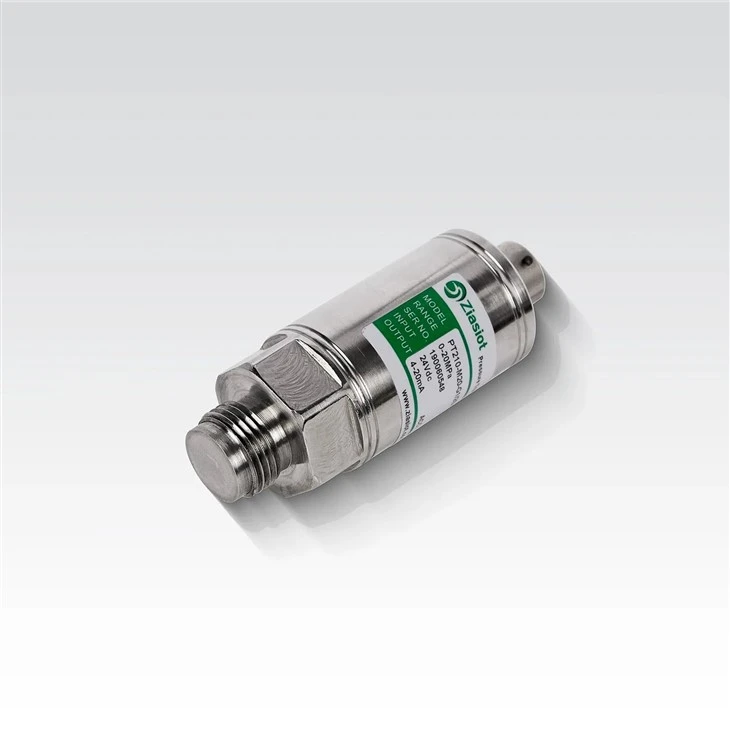
In industrial settings, the performance of pressure transmitters under various environmental conditions is crucial for accurate data acquisition and system control. High - vibration environments pose significant challenges to the proper functioning of these devices. As a supplier of Compact Pressure Transmitters, I will delve into how our Compact Pressure Transmitter performs in such demanding conditions.
Understanding High - Vibration Environments
High - vibration environments are common in many industrial applications. For example, in manufacturing plants, machinery such as large motors, pumps, and compressors generate vibrations. In transportation, vehicles like trains, ships, and airplanes also experience vibrations during operation. These vibrations can range from low - frequency, high - amplitude vibrations to high - frequency, low - amplitude vibrations.
The vibrations can have several negative impacts on pressure transmitters. Firstly, they can cause mechanical stress on the internal components of the transmitter. Over time, this stress can lead to component failure, such as cracked solder joints, broken wires, or damaged diaphragms. Secondly, vibrations can introduce noise into the electrical signals generated by the pressure transmitter. This noise can interfere with the accurate measurement of pressure, leading to inaccurate readings and potentially causing control systems to malfunction.
Design Features of Compact Pressure Transmitters for High - Vibration Resistance
Our Compact Pressure Transmitter is specifically designed to withstand high - vibration environments. One of the key design features is its robust mechanical construction. The housing of the transmitter is made of high - strength materials that can absorb and dissipate the energy from vibrations. This helps to protect the internal components from the direct impact of the vibrations.
Inside the transmitter, the sensing element is carefully mounted and isolated. We use advanced mounting techniques to minimize the transfer of vibrations from the housing to the sensing element. For example, we use shock - absorbing materials and flexible mounting brackets to isolate the sensing element from the external vibrations. This ensures that the sensing element can accurately measure the pressure without being affected by the vibrations.
Another important design feature is the use of signal conditioning circuits. These circuits are designed to filter out the noise introduced by the vibrations. They use advanced filtering algorithms to remove the high - frequency noise components from the electrical signals generated by the sensing element. This helps to ensure that the output signal of the pressure transmitter is accurate and reliable, even in high - vibration environments.
Testing and Validation in High - Vibration Environments
Before our Compact Pressure Transmitters are released to the market, they undergo rigorous testing in high - vibration environments. We use specialized vibration testing equipment to simulate the real - world vibration conditions that the transmitters may encounter.
During the testing process, we subject the transmitters to different levels and frequencies of vibrations. We measure the performance of the transmitters in terms of accuracy, stability, and reliability. We also monitor the internal components of the transmitters to ensure that they are not damaged by the vibrations.
The test results have shown that our Compact Pressure Transmitters can maintain high levels of accuracy and reliability in high - vibration environments. For example, in a vibration test with a frequency range of 10 - 2000 Hz and an acceleration of up to 20 g, the error rate of our transmitters was less than ±0.1%. This demonstrates the excellent performance of our transmitters in high - vibration environments.
Comparison with Other Pressure Transmitters
When compared with other types of pressure transmitters, our Compact Pressure Transmitter has several advantages in high - vibration environments. For example, some traditional pressure transmitters may have a larger size and a more complex internal structure. This makes them more susceptible to vibrations, as the larger size and more complex structure can amplify the effects of the vibrations.
In contrast, our Compact Pressure Transmitter has a compact design, which reduces the surface area exposed to the vibrations. This helps to minimize the impact of the vibrations on the transmitter. Additionally, our advanced design and signal conditioning circuits give us an edge over other transmitters in terms of noise reduction and accuracy in high - vibration conditions.

Real - World Applications
Our Compact Pressure Transmitters have been widely used in various high - vibration applications. For example, in the automotive industry, they are used to measure the pressure in the engine compartments of cars. The engine compartments are subject to high - frequency vibrations generated by the engine operation. Our transmitters can accurately measure the pressure in these environments, helping to ensure the proper operation of the engine.
In the aerospace industry, our Compact Pressure Transmitters are used to measure the pressure in the hydraulic systems of airplanes. These systems are exposed to vibrations during takeoff, flight, and landing. Our transmitters can provide reliable pressure measurements in these challenging conditions, contributing to the safety and performance of the airplanes.
Related Products
In addition to our Compact Pressure Transmitter, we also offer other related products that are suitable for high - vibration environments. One of these products is the Flush Diaphragm Sillcon Pressure Transmitter. This transmitter is designed with a flush diaphragm, which makes it suitable for applications where the pressure needs to be measured in viscous or dirty fluids. It also has a similar design for high - vibration resistance, making it a good choice for high - vibration environments.
Another related product is the Hydraulic Liquid Steam Pressure Transmitter Transducer. This transducer is specifically designed for measuring the pressure in hydraulic, liquid, and steam systems. It has a high - accuracy measurement capability and is also resistant to high - vibration environments.
Conclusion and Call to Action
In conclusion, our Compact Pressure Transmitter is a reliable solution for measuring pressure in high - vibration environments. Its robust design, advanced signal conditioning circuits, and rigorous testing ensure that it can provide accurate and reliable pressure measurements even in the most challenging conditions.
If you are looking for a pressure transmitter that can perform well in high - vibration environments, we invite you to explore our Compact Pressure Transmitter. Our team of experts is ready to assist you with your specific requirements. Whether you need a single transmitter for a small - scale project or a large number of transmitters for an industrial application, we can provide you with the right solution. Contact us today to start the procurement discussion and find out how our products can meet your needs.
References
- ISO 10816 - 3:2018, Mechanical vibration — Evaluation of machine vibration by measurements on non - rotating parts — Part 3: Industrial machines with nominal power above 15 kW and nominal speeds between 120 r/min and 15 000 r/min when measured in situ.
- IEEE Standard for Pressure Transmitters, IEEE Std C37.241 - 2019.