
Can an electromagnetic flowmeter be used in semiconductor manufacturing?
Leave a message

Can an electromagnetic flowmeter be used in semiconductor manufacturing?
Semiconductor manufacturing is a highly specialized and precise industry that demands the utmost accuracy and reliability in every aspect of its processes. One critical area where precision is of the essence is fluid flow measurement. In this blog post, as a supplier of electromagnetic flowmeters, I will explore the viability of using electromagnetic flowmeters in semiconductor manufacturing.


The Requirements of Semiconductor Manufacturing
Semiconductor manufacturing involves a series of complex processes, including wafer fabrication, etching, deposition, and cleaning. These processes often require the precise control and measurement of various fluids, such as deionized water, chemicals, and gases. The accuracy of fluid flow measurement is crucial for ensuring the quality and consistency of semiconductor products.
The fluids used in semiconductor manufacturing are typically highly pure and sensitive to contamination. Any impurities or variations in the flow rate can have a significant impact on the performance and yield of the semiconductor devices. Therefore, the flow measurement devices used in this industry must be capable of providing accurate and reliable measurements without introducing any contaminants or affecting the fluid properties.
How Electromagnetic Flowmeters Work
Electromagnetic flowmeters, also known as magmeters, operate based on Faraday's law of electromagnetic induction. When a conductive fluid flows through a magnetic field generated by the flowmeter, an electromotive force (EMF) is induced in the fluid. This EMF is proportional to the velocity of the fluid and can be measured by electrodes installed in the flowmeter.
The key advantage of electromagnetic flowmeters is their ability to measure the flow rate of conductive fluids accurately and non - intrusively. They have no moving parts, which reduces the risk of mechanical failure and wear. Additionally, electromagnetic flowmeters are relatively insensitive to changes in fluid density, viscosity, and temperature, making them suitable for a wide range of applications.
Advantages of Electromagnetic Flowmeters in Semiconductor Manufacturing
- High Accuracy: Electromagnetic flowmeters can provide high - accuracy flow measurements, typically with an accuracy of ±0.5% to ±1% of the measured value. This level of accuracy is essential for semiconductor manufacturing processes, where even small variations in fluid flow can lead to significant quality issues.
- Non - Intrusive Measurement: Since electromagnetic flowmeters do not have any moving parts or obstructions in the flow path, they do not disrupt the flow of the fluid. This non - intrusive measurement method is ideal for semiconductor manufacturing, where maintaining the integrity of the fluid flow is crucial to prevent contamination and ensure consistent process results.
- Wide Range of Conductive Fluids: Many of the fluids used in semiconductor manufacturing, such as deionized water and some chemical solutions, are conductive. Electromagnetic flowmeters can accurately measure the flow rate of these conductive fluids, making them a suitable choice for various applications in the semiconductor industry.
- Low Maintenance: With no moving parts, electromagnetic flowmeters require minimal maintenance. This is an important consideration in semiconductor manufacturing, where downtime for maintenance can be costly and disrupt the production schedule.
Challenges and Considerations
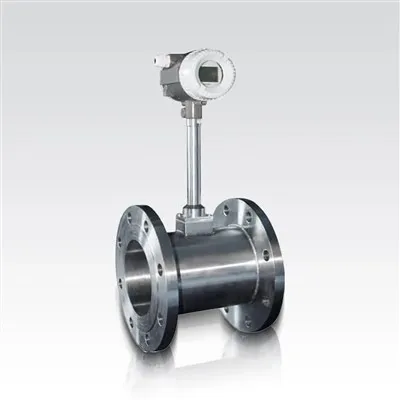
- Fluid Conductivity: While electromagnetic flowmeters are suitable for conductive fluids, they cannot measure the flow rate of non - conductive fluids, such as some gases. In semiconductor manufacturing, where both conductive and non - conductive fluids are used, additional flow measurement devices may be required. For non - conductive fluids, other types of flowmeters such as Vortex Flowmeter or Turbine Flow Meter can be considered.
- Installation Requirements: Proper installation of electromagnetic flowmeters is crucial for accurate measurement. The flowmeter must be installed in a straight section of the pipe to ensure a uniform flow profile. Additionally, the electrodes must be in contact with the fluid to measure the induced EMF accurately. Any misalignment or improper installation can lead to measurement errors.
- Cost: Electromagnetic flowmeters can be relatively expensive compared to some other types of flowmeters. However, the high accuracy and reliability they offer often justify the cost in semiconductor manufacturing, where the quality and yield of the products are of utmost importance.
Applications in Semiconductor Manufacturing
- Deionized Water Supply: Deionized water is widely used in semiconductor manufacturing for cleaning and rinsing processes. Electromagnetic flowmeters can accurately measure the flow rate of deionized water, ensuring that the proper amount of water is used in each process step.
- Chemical Delivery: Many chemicals are used in semiconductor manufacturing, such as acids, bases, and solvents. Electromagnetic flowmeters can be used to measure the flow rate of these conductive chemical solutions, allowing for precise control of the chemical dosage.
Conclusion
In conclusion, electromagnetic flowmeters can be a valuable tool in semiconductor manufacturing. Their high accuracy, non - intrusive measurement method, and suitability for conductive fluids make them well - suited for many applications in this industry. However, it is important to consider the challenges and limitations, such as fluid conductivity and installation requirements.
If you are involved in semiconductor manufacturing and are looking for a reliable flow measurement solution, our LDG Electromagnetic Flowmeter offers the performance and accuracy you need. We are committed to providing high - quality flow measurement products and excellent customer service. If you have any questions or would like to discuss your specific requirements, please feel free to contact us for a detailed consultation and procurement negotiation.
References
- "Flow Measurement Handbook: Principles and Practice". Richard W. Miller.
- "Semiconductor Manufacturing Technology". S. Wolf, R. N. Tauber.