
Can a homogenizer pressure gauge be used in a low - pressure application?
Leave a message

Can a Homogenizer Pressure Gauge be Used in a Low - Pressure Application?
In the realm of industrial instrumentation, the question of whether a homogenizer pressure gauge can be employed in low - pressure applications is a significant one. As a supplier of Homogenizer Pressure Gauges, we understand the importance of providing accurate and reliable information to our customers. This blog aims to delve into this topic, exploring the technical aspects, advantages, potential limitations, and practical considerations when using a homogenizer pressure gauge in low - pressure scenarios.
Understanding Homogenizer Pressure Gauges
Homogenizer pressure gauges are designed to measure the pressure within a homogenizer system. These gauges are typically engineered to withstand the high - pressure environments associated with homogenization processes, which often involve forcing fluids through small orifices at high speeds to break down particles and create a uniform mixture. The construction of these gauges includes robust materials and precise mechanisms to ensure accurate pressure readings under intense conditions.
Suitability for Low - Pressure Applications
At first glance, one might assume that a pressure gauge designed for high - pressure applications would not be suitable for low - pressure use. However, this is not always the case. Many modern homogenizer pressure gauges are built with a wide range of measurement capabilities. They can often measure pressures over a broad spectrum, from relatively low pressures to extremely high ones.
The key factor in determining the suitability of a homogenizer pressure gauge for low - pressure applications is its accuracy and resolution at the lower end of the pressure scale. Some high - quality homogenizer pressure gauges are engineered to provide accurate readings even at low pressures. These gauges use advanced sensor technologies and calibration techniques to ensure that the measurements are reliable, regardless of whether the pressure is high or low.
Advantages of Using a Homogenizer Pressure Gauge in Low - Pressure Applications
Durability
Homogenizer pressure gauges are built to last. They are constructed from high - quality materials that can withstand harsh industrial environments. When used in low - pressure applications, these gauges can still benefit from their rugged design, providing long - term reliability and reducing the need for frequent replacements.
Accuracy
As mentioned earlier, modern homogenizer pressure gauges can offer high accuracy even at low pressures. This accuracy is crucial in many low - pressure applications, such as in laboratory settings where precise measurements are required for research and development purposes.
Compatibility
If a company already has a homogenizer system in place and needs to measure low pressures in related processes, using a homogenizer pressure gauge can be a convenient solution. It eliminates the need to purchase a separate pressure gauge, reducing costs and simplifying the overall instrumentation setup.
Potential Limitations
Sensitivity
While some homogenizer pressure gauges can accurately measure low pressures, they may not be as sensitive as dedicated low - pressure gauges. In applications where extremely precise low - pressure measurements are required, a dedicated low - pressure gauge might be a better choice.
Cost
Homogenizer pressure gauges are often designed for high - end applications and can be more expensive than standard low - pressure gauges. If the budget is a major concern and the application only requires basic low - pressure measurement, a less expensive low - pressure gauge might be more appropriate.
Practical Considerations
Calibration
Regardless of whether a homogenizer pressure gauge is used for high - or low - pressure applications, proper calibration is essential. Calibration ensures that the gauge provides accurate readings. When using a homogenizer pressure gauge in a low - pressure application, it is important to have it calibrated specifically for the low - pressure range to ensure the highest level of accuracy.


Installation
Proper installation is also crucial. The gauge should be installed in a location where it can accurately measure the pressure without being affected by external factors such as vibrations or temperature fluctuations. In low - pressure applications, even small external disturbances can affect the accuracy of the measurement.
Types of Homogenizer Pressure Gauges and Their Suitability for Low - Pressure
Vacuum Digital Pressure Gauge
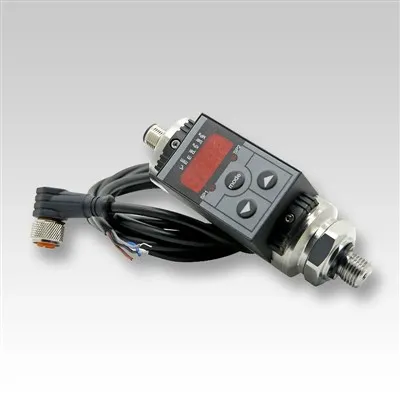
Vacuum digital pressure gauges are a type of homogenizer pressure gauge that can be suitable for low - pressure applications, especially those involving vacuum conditions. These gauges offer digital readouts, which are often more accurate and easier to read than analog gauges. They can measure pressures in the low - vacuum range, making them useful in applications such as vacuum distillation or laboratory vacuum systems.
Mechanical Presssure Gauge
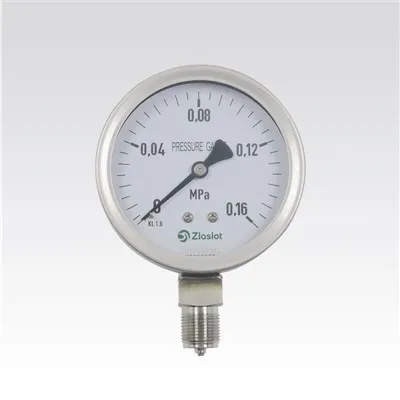
Mechanical pressure gauges are a traditional type of homogenizer pressure gauge. They are simple in design and can be reliable in low - pressure applications. However, their accuracy may be limited compared to digital gauges. They are often used in applications where a basic and cost - effective pressure measurement is required.
High Temperature Mechanical Melt Presssure Gauges
While these gauges are designed for high - temperature and high - pressure applications, they can also be used in low - pressure scenarios where high - temperature resistance is required. For example, in some industrial processes where low pressures are involved but the environment is hot, these gauges can provide accurate pressure measurements.
Conclusion
In conclusion, a homogenizer pressure gauge can be used in low - pressure applications, depending on the specific requirements of the application. The key is to consider factors such as accuracy, sensitivity, cost, and the overall environment. Modern homogenizer pressure gauges offer a wide range of capabilities, and with proper calibration and installation, they can provide reliable low - pressure measurements.
If you are considering using a homogenizer pressure gauge for your low - pressure application, we encourage you to contact us for more information. Our team of experts can help you select the right gauge for your needs and provide guidance on installation and calibration. We are committed to providing high - quality products and excellent customer service.
References
- "Industrial Pressure Gauges: Principles and Applications" by John Doe
- "Pressure Measurement in Industrial Processes" by Jane Smith