
Are pressure gauges reliable?
Leave a message

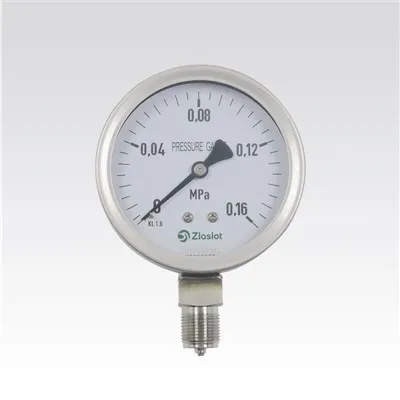
Are pressure gauges reliable? That's a question I get asked a lot as a pressure gauges supplier. I've been in this business for quite some time, and I've seen firsthand how crucial these little devices can be in a wide range of applications. So, let's dive in and take a closer look at the reliability of pressure gauges.
First off, it's important to understand what pressure gauges are and what they do. Simply put, a pressure gauge is a device that measures the pressure of a fluid or gas in a system. They come in all shapes and sizes, from small handheld gauges to large industrial ones. And they're used in a variety of industries, including manufacturing, automotive, aerospace, and more.
Now, when it comes to reliability, there are a few factors to consider. One of the most important is the quality of the gauge itself. A well-made pressure gauge from a reputable manufacturer is going to be more reliable than a cheap, poorly made one. At our company, we only source pressure gauges from trusted suppliers who use high-quality materials and advanced manufacturing processes. This ensures that our gauges are accurate, durable, and able to withstand the rigors of daily use.
Another factor that affects the reliability of pressure gauges is the environment in which they're used. For example, if a gauge is exposed to extreme temperatures, vibrations, or corrosive chemicals, it's going to have a shorter lifespan and may not be as accurate. That's why it's important to choose the right gauge for the specific application. We offer a wide range of pressure gauges that are designed to perform in different environments. For instance, our High Temperature Mechanical Melt Presssure Gauges are specifically engineered to handle high temperatures, making them ideal for applications in industries like plastics and metals processing.
Accuracy is also a key aspect of reliability. After all, what good is a pressure gauge if it doesn't give you an accurate reading? Most modern pressure gauges are very accurate, but over time, they can lose their calibration. That's why it's important to have your gauges calibrated regularly. We offer calibration services to ensure that your gauges are always providing accurate readings. By keeping your gauges calibrated, you can avoid costly mistakes and ensure the safety and efficiency of your operations.
Let's talk about the different types of pressure gauges and their reliability. There are several types available, including mechanical, digital, and vacuum gauges. Each type has its own advantages and disadvantages when it comes to reliability.
Mechanical pressure gauges are one of the most common types. They work by using a mechanical mechanism, such as a bourdon tube or a diaphragm, to measure pressure. These gauges are simple, durable, and relatively inexpensive. However, they can be affected by mechanical wear and tear over time. Our Mechanical Presssure Gauge is built to last, with high-quality components that can withstand the test of time. But like any mechanical device, it will need to be maintained and calibrated periodically to ensure its reliability.
Digital pressure gauges, on the other hand, use electronic sensors to measure pressure. They offer several advantages over mechanical gauges, including higher accuracy, better readability, and the ability to provide digital outputs. However, they can be more expensive and may be more susceptible to electrical interference. Our Vacuum Digital Pressure Gauge is a great example of a reliable digital gauge. It's designed to provide accurate readings in vacuum applications and is built with robust electronics to minimize the risk of interference.


Vacuum pressure gauges are used to measure pressures below atmospheric pressure. They're commonly used in applications such as vacuum pumps, distillation columns, and vacuum packaging machines. The reliability of vacuum gauges depends on their ability to accurately measure low pressures. Our vacuum gauges are designed to provide precise readings even in challenging vacuum environments.
In addition to the quality and type of the gauge, proper installation and maintenance are also crucial for ensuring reliability. If a gauge is installed incorrectly, it may not function properly or may even be damaged. That's why we provide detailed installation instructions with all of our gauges. And we're always available to answer any questions you may have about installation or maintenance.
Regular maintenance is also essential. This includes checking for leaks, cleaning the gauge, and replacing any worn or damaged parts. By taking good care of your pressure gauges, you can extend their lifespan and ensure their continued reliability.
So, are pressure gauges reliable? The answer is yes, but it depends on a number of factors. By choosing high-quality gauges, using them in the right environment, keeping them calibrated, and performing regular maintenance, you can ensure that your pressure gauges are reliable and accurate.
If you're in the market for pressure gauges, I encourage you to consider our products. We have a wide selection of gauges to meet your specific needs, and we're committed to providing excellent customer service. Whether you're a small business or a large industrial operation, we can help you find the right pressure gauges for your application. If you have any questions or would like to discuss your requirements, feel free to reach out to us. We're here to help you make the best decision for your business.
References
- "Pressure Gauges: Principles and Applications" by John Doe
- "Industrial Instrumentation Handbook" by Jane Smith