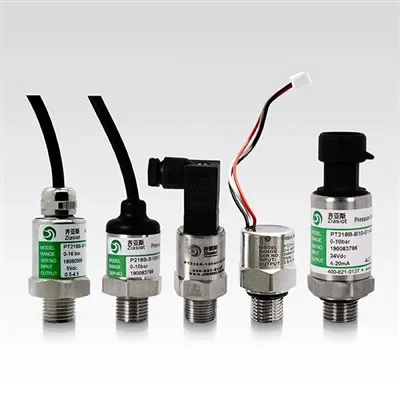
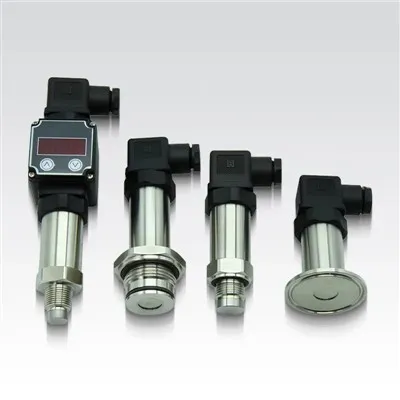
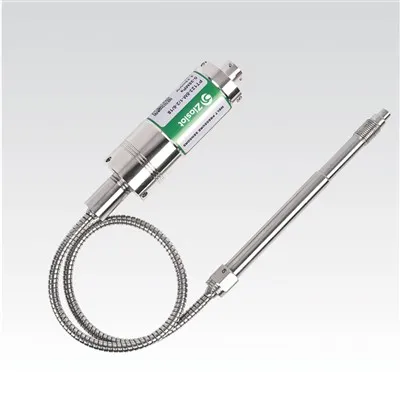
A melt pressure transmitter and a melt pressure transducer
Leave a message
A melt pressure transmitter and a melt pressure transducer are both critical instruments used to measure and monitor the pressure of molten materials, particularly in high-temperature processes like plastic extrusion, injection molding, and rubber processing. They both serve the same primary purpose - pressure measurement - but they have some key differences in functionality and application.
Melt Pressure Transducer
A melt pressure transducer is a device that converts the mechanical pressure of molten material into an electrical signal. This signal is typically small (millivolts), and it directly represents the pressure being exerted by the molten material.
Key Features:
Pressure Sensing: The transducer has a sensitive diaphragm (often made of stainless steel or other high-temperature-resistant materials) that flexes under pressure. Behind this diaphragm, a strain gauge or piezoelectric element detects the deflection and converts it into an electrical signal.
Electrical Signal Output: The output is usually a low-level voltage signal (e.g., in the range of millivolts). This signal needs further amplification or conditioning by external equipment to be useful for control systems.
Temperature Resistance: Since the device operates in environments where the molten materials can reach extremely high temperatures (up to 400°C or more), the transducer is built to resist high temperatures and maintain accuracy under extreme conditions.
Applications:
Plastic Extrusion: Monitoring pressure changes in the molten plastic as it passes through the extruder to ensure consistent flow and product quality.
Injection Molding: Ensuring the right pressure is applied when filling molds, preventing defects in the final product.
Rubber and Polymer Processing: Detecting pressure changes to avoid machinery damage and maintain product integrity.
Summary:
A melt pressure transducer is primarily a sensor that converts pressure into an electrical signal but does not process or amplify that signal. It is used when the raw data is fed into external control systems or amplifiers.
Melt Pressure Transmitter
A melt pressure transmitter includes a transducer but adds additional electronics to condition, amplify, and output the signal in a standardized form. It not only measures the pressure but also processes the signal, making it more compatible with various control systems.
Key Features:
Signal Conditioning and Amplification: The transmitter takes the raw signal from the transducer and amplifies it. It may also convert the signal into a standardized output format like 4-20 mA or 0-10 V. This makes it easier to integrate with control systems like PLCs (Programmable Logic Controllers) or SCADA systems.
Remote Monitoring: Since the transmitter provides a processed and amplified signal, it can be transmitted over longer distances without losing signal integrity.
Enhanced Functionality: Some transmitters may include additional features like digital displays, zero/span adjustment, and even temperature compensation for more accurate pressure readings.
Applications:
Extrusion Line Control: The transmitter sends pressure data directly to the control systems to adjust motor speeds or cooling rates automatically, ensuring consistent product dimensions and material quality.
Injection Molding Control: It allows for real-time pressure monitoring and adjustment to ensure that molds are filled properly without causing defects.
High-Temperature Monitoring: In processes involving high-pressure, high-temperature fluids, the transmitter helps maintain safety and operational efficiency by providing reliable, amplified signals to remote control systems.
Summary:
A melt pressure transmitter includes the sensor function of a transducer but adds amplification and signal processing, making it suitable for applications requiring standardized outputs and remote monitoring.
Key Differences:
|
Characteristic |
Melt Pressure Transducer |
Melt Pressure Transmitter |
|
Functionality |
Converts pressure into a low-level electrical signal |
Converts pressure and amplifies the signal for remote use |
|
Output Signal |
Low-level (e.g., millivolt range) |
Standardized (e.g., 4-20 mA, 0-10 V) |
|
Signal Processing |
No signal amplification or conditioning |
Includes signal conditioning, amplification, and sometimes temperature compensation |
|
Application |
Typically used where raw data is needed locally |
Used in systems requiring long-distance signal transmission and control integration |
|
Integration |
Needs external amplifiers or signal conditioners |
Can be directly connected to control systems like PLCs |