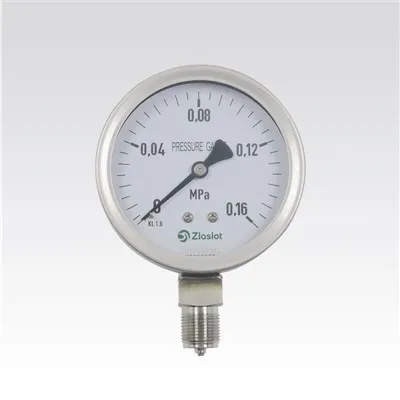
What materials are used in the construction of a digital pressure gauge?
Leave a message

When it comes to the construction of a digital pressure gauge, a variety of materials play crucial roles in ensuring its functionality, durability, and accuracy. As a leading supplier of digital pressure gauges, I have in - depth knowledge of the materials used in these essential measuring devices.
Sensor Materials
The sensor is the heart of a digital pressure gauge, responsible for converting pressure into an electrical signal. One of the most commonly used materials for pressure sensors is silicon. Silicon sensors offer several advantages. Firstly, they have excellent sensitivity, which allows them to detect even the slightest changes in pressure. This high - level of sensitivity is crucial in applications where precise pressure measurements are required, such as in the pharmaceutical and semiconductor industries.


Silicon is also highly stable over a wide range of temperatures. Temperature variations can significantly affect the accuracy of pressure measurements, but silicon sensors can maintain their performance within a broad temperature spectrum. Additionally, silicon is a semiconductor material, which means it can be easily integrated with electronic circuits. This integration simplifies the design of the digital pressure gauge and reduces its size, making it more suitable for various applications.
Another material used in sensor construction is ceramic. Ceramic sensors are known for their robustness and resistance to harsh environments. They can withstand high pressures and are less likely to be damaged by mechanical shocks compared to silicon sensors. Ceramic sensors are often used in industrial applications, such as in oil and gas refineries, where the pressure gauges are exposed to extreme conditions. The ceramic material used in these sensors is typically alumina, which has high mechanical strength and chemical stability.
Housing Materials
The housing of a digital pressure gauge serves to protect the internal components from physical damage, dust, and moisture. One of the most popular housing materials is stainless steel. Stainless steel is highly corrosion - resistant, making it suitable for use in both indoor and outdoor environments. It can withstand exposure to chemicals, water, and air, ensuring the long - term durability of the pressure gauge.
Stainless steel also has good mechanical strength, which means it can protect the internal components from impacts and vibrations. In industrial settings, where pressure gauges may be subject to rough handling, a stainless - steel housing provides reliable protection. Moreover, stainless steel has an aesthetically pleasing appearance, which makes it a popular choice for applications where the appearance of the equipment matters.
Plastic is another commonly used housing material. Plastic housings are lightweight, which makes them easy to install and transport. They are also cost - effective, making them a suitable option for budget - conscious customers. There are different types of plastics used in pressure gauge housings, such as polycarbonate and acrylonitrile butadiene styrene (ABS). Polycarbonate is known for its high impact resistance and transparency, which allows for easy viewing of the display. ABS, on the other hand, has good chemical resistance and mechanical properties.
Display Materials
The display of a digital pressure gauge is what allows users to read the pressure measurements. Liquid crystal displays (LCDs) are widely used in digital pressure gauges. LCDs are energy - efficient, which means they consume less power compared to other display technologies. This is important for battery - powered pressure gauges, as it extends the battery life.
LCDs also have good visibility under different lighting conditions. They can be easily read in both bright sunlight and dimly lit environments. The materials used in LCDs include liquid crystals, polarizers, and glass substrates. The liquid crystals change their orientation in response to an electric field, which allows them to control the passage of light and create the display image.
Organic light - emitting diodes (OLEDs) are also starting to be used in some high - end digital pressure gauges. OLEDs offer better contrast ratios and wider viewing angles compared to LCDs. They are self - emissive, which means they do not require a backlight, resulting in thinner and more flexible displays. However, OLEDs are more expensive than LCDs, so they are not as commonly used in mass - market pressure gauges.
Circuit Board Materials
The circuit board in a digital pressure gauge is responsible for processing the electrical signals from the sensor and displaying the pressure readings on the screen. Printed circuit boards (PCBs) are typically made of fiberglass - reinforced epoxy resin, also known as FR - 4. FR - 4 is a popular choice because it has good electrical insulation properties, mechanical strength, and heat resistance.
The copper traces on the PCB are used to connect the different components of the circuit. Copper is an excellent conductor of electricity, which ensures efficient signal transmission. In some high - performance digital pressure gauges, the PCBs may be made of more advanced materials, such as ceramic substrates. Ceramic PCBs offer better thermal conductivity, which is beneficial for dissipating heat generated by the electronic components.
Sealing Materials
Sealing materials are used to prevent the ingress of dust, moisture, and gases into the pressure gauge. Rubber is a commonly used sealing material. It has good elasticity, which allows it to form a tight seal around the openings of the pressure gauge. Different types of rubber, such as nitrile rubber and silicone rubber, are used depending on the application.
Nitrile rubber is resistant to oil and fuel, making it suitable for use in automotive and industrial applications. Silicone rubber, on the other hand, has good temperature resistance and can be used in applications where the pressure gauge is exposed to high or low temperatures.
In addition to rubber, gaskets made of materials like PTFE (polytetrafluoroethylene) are also used. PTFE gaskets have excellent chemical resistance and low friction coefficients, which make them suitable for use in applications where the pressure gauge is in contact with corrosive chemicals.
As a digital pressure gauge supplier, we understand the importance of using high - quality materials in the construction of our products. We offer a wide range of digital pressure gauges, including Vacuum Digital Pressure Gauge, Mechanical Presssure Gauge, and Digital Melt Presssure Gauges. Our products are designed to meet the diverse needs of our customers, whether they are in the industrial, automotive, or laboratory sectors.
If you are interested in purchasing digital pressure gauges or have any questions about our products, please feel free to contact us for a detailed discussion. We are committed to providing you with the best products and services to meet your pressure measurement needs.
References
- "Pressure Measurement Handbook" by Peter J. Schmitz
- "Industrial Instrumentation and Control Handbook" by Bela G. Liptak