
What is the thermal shock resistance of ceramic pressure transmitters?
Leave a message

Hey there! As a supplier of Ceramic Pressure Transmitters, I often get asked about the thermal shock resistance of these nifty devices. So, let's dive right in and explore what thermal shock resistance means for ceramic pressure transmitters.
First off, what exactly is thermal shock? Well, it's when a material experiences a sudden and significant change in temperature. This can happen in a variety of industrial settings. For example, in a chemical processing plant, a pressure transmitter might be exposed to hot fluids one moment and then cold ones the next. Or in a refrigeration system, the temperature can fluctuate rapidly as the system cycles on and off.
Ceramic pressure transmitters are pretty cool (pun intended) because they're made from ceramic materials. Ceramics have some unique properties that make them well - suited for handling thermal shock. One of the key factors is their low coefficient of thermal expansion. This means that when the temperature changes, the ceramic doesn't expand or contract as much as some other materials.
Let's take a closer look at how this low coefficient of thermal expansion helps with thermal shock resistance. When a ceramic pressure transmitter is exposed to a sudden temperature change, the minimal expansion or contraction reduces the stress on the material. If a material expands or contracts too much, it can crack or break. But with ceramics, the risk of this happening is much lower.
Another aspect of the thermal shock resistance of ceramic pressure transmitters is their ability to handle high - temperature gradients. In some industrial processes, there can be large differences in temperature between different parts of the transmitter. Ceramics can withstand these gradients without losing their structural integrity.


Now, let's talk about the real - world applications. In the oil and gas industry, for instance, ceramic pressure transmitters are used in wellhead monitoring. The temperature in a well can vary widely depending on the depth and the type of fluid being extracted. A ceramic pressure transmitter with good thermal shock resistance can accurately measure the pressure even when faced with these temperature variations.
In the food and beverage industry, where hygiene and temperature control are crucial, ceramic pressure transmitters are also a popular choice. They can handle the sudden temperature changes that occur during cleaning and sterilization processes.
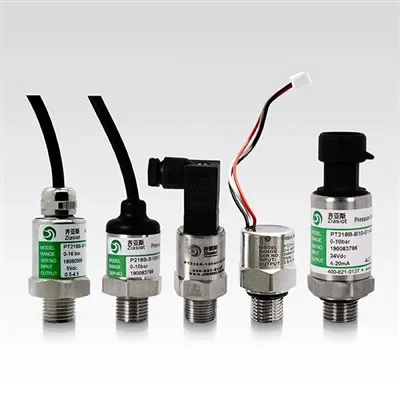
As a supplier, we offer a range of ceramic pressure transmitters to meet different needs. Our Standard Ceramic Pressure Transmitter is a great all - around option. It's designed to provide accurate pressure measurements in a variety of environments, including those with thermal shock.
If you're dealing with more challenging conditions, our Anti - Crossive Pressure Transmitter might be the way to go. This transmitter is built to resist the effects of cross - talk and interference, and it also has excellent thermal shock resistance.
For the refrigeration industry, our Refrigeration Pressure Transmitter is specifically designed to handle the rapid temperature changes that are common in refrigeration systems.
When it comes to choosing a ceramic pressure transmitter, it's important to consider the thermal shock resistance. You want a transmitter that can stand up to the temperature changes in your specific application. This will ensure accurate and reliable pressure measurements over the long term.
If you're in the market for a ceramic pressure transmitter, don't hesitate to reach out. We're here to help you find the right product for your needs. Whether you're in a small - scale operation or a large industrial plant, we have the expertise and the products to meet your requirements.
In conclusion, the thermal shock resistance of ceramic pressure transmitters is a crucial factor in their performance. Thanks to the unique properties of ceramics, these transmitters can handle sudden temperature changes without compromising their accuracy or durability. So, if you're looking for a reliable pressure measurement solution, consider our ceramic pressure transmitters.
References:
- Ceramic Materials: Properties and Applications, Journal of Materials Science
- Industrial Pressure Transmitter Handbook, Industrial Press Inc.