
What is the stability of the output signal of ceramic pressure transmitters?
Leave a message

As a provider of ceramic pressure transmitters, I've witnessed firsthand the importance of output signal stability in various industrial applications. In this blog, I'll delve into what the stability of the output signal of ceramic pressure transmitters entails, why it matters, and how our products ensure reliable performance.


Understanding the Stability of Output Signals
The stability of the output signal of a ceramic pressure transmitter refers to its ability to maintain a consistent and accurate output over time, under different operating conditions. A stable output signal is crucial because it directly affects the reliability and accuracy of the measurement system. In industrial processes, even the slightest deviation in the output signal can lead to incorrect readings, which may result in costly errors, product quality issues, or even safety hazards.
Several factors can influence the stability of the output signal of ceramic pressure transmitters. One of the primary factors is the quality of the ceramic sensing element. High - quality ceramics have excellent mechanical and electrical properties, such as high stiffness, low creep, and good chemical resistance. These properties ensure that the sensing element can accurately convert pressure into an electrical signal without significant drift over time.
Another important factor is the design and manufacturing process of the transmitter. A well - designed transmitter will have proper signal conditioning circuits that can compensate for temperature variations, electromagnetic interference, and other external factors. For example, temperature compensation is essential because the electrical properties of the ceramic sensing element can change with temperature, which can affect the output signal.
Why Stability Matters
In industrial applications, stability is not just a nice - to - have feature; it's a necessity. Let's take the oil and gas industry as an example. In oil pipelines, pressure transmitters are used to monitor the pressure of the flowing oil. A stable output signal is crucial to ensure the safe and efficient operation of the pipeline. If the output signal is unstable, it can lead to false alarms or inaccurate pressure readings, which may cause operational disruptions or even pipeline failures.
In the food and beverage industry, pressure transmitters are used to control the pressure in processing equipment. A stable output signal is necessary to ensure the consistency of the product quality. For instance, in the brewing process, accurate pressure control is essential to achieve the desired taste and quality of the beer. Unstable output signals can lead to variations in the product, resulting in customer dissatisfaction.
Our Ceramic Pressure Transmitters and Signal Stability
At our company, we are committed to providing ceramic pressure transmitters with high - stability output signals. We use advanced ceramic materials and manufacturing processes to ensure the reliability and accuracy of our products.
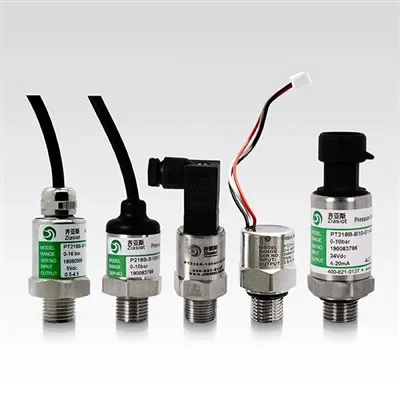
Our Standard Ceramic Pressure Transmitter is designed for general - purpose applications. It features a high - quality ceramic sensing element and a state - of - the - art signal conditioning circuit. This transmitter can provide a stable output signal even in harsh environments, such as high - temperature and high - humidity conditions.
The Anti - Crossive Pressure Transmitter is another product in our portfolio. It is specifically designed to resist cross - talk and interference, which can often cause instability in the output signal. This transmitter is ideal for applications where multiple pressure sensors are used in close proximity.
Our Refrigeration Pressure Transmitter is tailored for the refrigeration industry. It can accurately measure the pressure in refrigeration systems and provide a stable output signal, even under the dynamic operating conditions of refrigeration cycles.
Ensuring Long - Term Stability
To ensure the long - term stability of our ceramic pressure transmitters, we conduct rigorous testing during the manufacturing process. Each transmitter is tested under various conditions, including temperature cycling, vibration, and shock testing. This helps us to identify and eliminate any potential issues that may affect the stability of the output signal.
We also provide comprehensive after - sales support to our customers. Our technical team is available to assist with installation, calibration, and troubleshooting. We offer regular maintenance services to ensure that our transmitters continue to provide stable and accurate output signals over their lifespan.
Contact Us for Purchase and Consultation
If you are in the market for high - quality ceramic pressure transmitters with stable output signals, we invite you to contact us for more information. Our team of experts can help you select the right product for your specific application and provide you with detailed technical specifications and pricing. We are committed to providing you with the best products and services to meet your industrial needs.
References
- [1] Pressure Transmitter Handbook, Industrial Instrumentation Association.
- [2] Ceramic Materials for Sensor Applications, Journal of Advanced Ceramics.
- [3] Stability Analysis of Pressure Transmitters in Harsh Environments, International Journal of Instrumentation and Control Engineering.