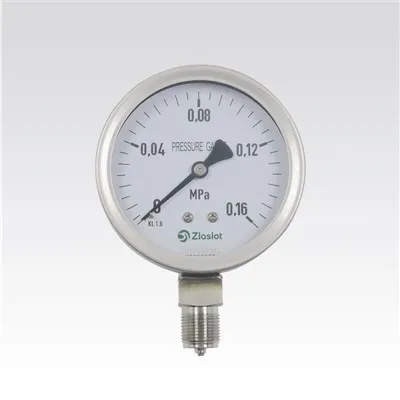

What is the frequency response of a Compact Pressure Transmitter?
Leave a message

What is the frequency response of a Compact Pressure Transmitter?
As a leading supplier of compact pressure transmitters, I often encounter questions from customers about the frequency response of these devices. Understanding the frequency response is crucial for selecting the right pressure transmitter for specific applications, as it directly impacts the accuracy and reliability of pressure measurements. In this blog post, I will delve into the concept of frequency response in compact pressure transmitters, explain its significance, and discuss how it affects performance in various industrial scenarios.
Understanding Frequency Response
Frequency response refers to the ability of a pressure transmitter to accurately measure pressure changes over a range of frequencies. In simple terms, it describes how well the transmitter can track rapid fluctuations in pressure. A pressure transmitter with a good frequency response can quickly and accurately respond to changes in pressure, providing real - time and precise measurements.
The frequency response of a compact pressure transmitter is typically characterized by its bandwidth. Bandwidth is defined as the range of frequencies over which the transmitter can operate effectively, usually expressed in hertz (Hz). For example, a pressure transmitter with a bandwidth of 0 - 100 Hz can accurately measure pressure changes that occur at frequencies between 0 and 100 Hz.
The frequency response of a pressure transmitter is influenced by several factors, including the mechanical design of the sensing element, the electrical characteristics of the signal conditioning circuit, and the overall construction of the device. For instance, a transmitter with a more rigid sensing element may have a higher natural frequency, allowing it to respond to higher - frequency pressure changes.
Significance of Frequency Response in Industrial Applications
In industrial applications, the frequency response of a compact pressure transmitter plays a vital role in ensuring accurate and reliable pressure measurements. Here are some key areas where frequency response is particularly important:
Dynamic Pressure Measurements: In applications where pressure changes rapidly, such as in hydraulic systems, pumps, and compressors, a pressure transmitter with a high - frequency response is essential. For example, in a hydraulic system, the pressure can fluctuate rapidly due to the operation of valves and cylinders. A transmitter with a poor frequency response may not be able to accurately capture these rapid pressure changes, leading to inaccurate measurements and potential system malfunctions.
Vibration and Noise Immunity: In industrial environments, pressure transmitters are often exposed to vibrations and noise. A transmitter with a good frequency response can better distinguish between the actual pressure signal and the noise caused by vibrations. This helps to improve the signal - to - noise ratio and ensures that the measured pressure is accurate and reliable.


Process Control: In process control applications, accurate pressure measurements are crucial for maintaining the stability and efficiency of the process. A pressure transmitter with a suitable frequency response can provide timely and accurate pressure data, allowing for precise control of the process variables. For example, in a chemical manufacturing process, the pressure in a reactor needs to be carefully controlled to ensure the quality of the product. A transmitter with a poor frequency response may not be able to provide the necessary real - time pressure information, leading to process instability and product quality issues.
Factors Affecting Frequency Response
As mentioned earlier, several factors can affect the frequency response of a compact pressure transmitter. Let's take a closer look at some of these factors:
Sensing Element Design: The design of the sensing element is one of the most important factors influencing frequency response. Different types of sensing elements, such as strain - gauge, piezoelectric, and capacitive sensors, have different natural frequencies and response characteristics. For example, piezoelectric sensors are known for their high - frequency response and are often used in applications where rapid pressure changes need to be measured.
Signal Conditioning Circuit: The signal conditioning circuit in a pressure transmitter is responsible for amplifying and processing the electrical signal generated by the sensing element. The design of the signal conditioning circuit can have a significant impact on the frequency response of the transmitter. A well - designed circuit can help to improve the signal - to - noise ratio and extend the bandwidth of the transmitter.
Mechanical Packaging: The mechanical packaging of the pressure transmitter can also affect its frequency response. The housing and mounting of the transmitter can introduce additional mechanical resonances, which can interfere with the measurement of the pressure signal. A well - designed mechanical package can help to minimize these resonances and improve the overall frequency response of the transmitter.
Our Product Range and Frequency Response
At our company, we offer a wide range of compact pressure transmitters with different frequency response characteristics to meet the diverse needs of our customers. Our Sanitary Flat - Diaphragm Digital Pressure Transmitter is designed for applications in the food, beverage, and pharmaceutical industries, where hygiene and accurate pressure measurements are of utmost importance. This transmitter has a high - frequency response, allowing it to accurately measure pressure changes in dynamic processes.
Our Sanitary Pressure Transmitter is suitable for high - temperature and harsh industrial environments. It is engineered to provide reliable pressure measurements with a good frequency response, even in the presence of vibrations and noise.
For applications in hydraulic systems and other industrial processes where rapid pressure changes occur, our Hydraulic Liquid Steam Pressure Transmitter Transducer offers a high - bandwidth frequency response. This transmitter can accurately capture the dynamic pressure changes in these systems, ensuring reliable operation and precise control.
Conclusion
The frequency response of a compact pressure transmitter is a critical parameter that determines its performance in various industrial applications. By understanding the concept of frequency response, its significance, and the factors that affect it, customers can make informed decisions when selecting a pressure transmitter for their specific needs.
At our company, we are committed to providing high - quality compact pressure transmitters with excellent frequency response characteristics. If you are looking for a reliable pressure transmitter for your industrial application, we invite you to contact us for more information and to discuss your specific requirements. Our team of experts will be happy to assist you in selecting the right product and providing you with the best solution for your pressure measurement needs.
References
- "Pressure Transmitter Handbook" by Instrumentation and Control Engineers
- "Industrial Pressure Measurement: Principles and Applications" by John Doe