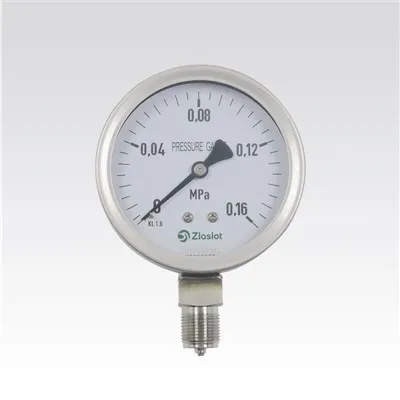

What are the signs that a melt pressure gauge needs to be replaced?
Leave a message

Hey there! As a supplier of Melt Pressure Gauges, I've seen my fair share of these nifty devices over the years. Melt pressure gauges are super important in industries like plastics processing, extrusion, and injection molding. They help us keep tabs on the pressure of molten materials, ensuring everything runs smoothly. But just like any other piece of equipment, they don't last forever. So, in this blog, I'm gonna talk about the signs that a melt pressure gauge needs to be replaced.
Inaccurate Readings
One of the most obvious signs that your melt pressure gauge is on its last legs is when it starts giving inaccurate readings. You're sitting there, trying to run your production line efficiently, and the gauge is showing numbers that just don't make sense. Maybe it's showing a pressure that's way too high or too low compared to what you'd expect based on your process parameters.
There could be a few reasons for this. Over time, the internal components of the gauge can wear out. The diaphragm, which is a crucial part that senses the pressure, can get damaged or lose its elasticity. When that happens, it won't accurately translate the pressure into a readable value. Also, if the gauge has been exposed to high temperatures or harsh chemicals, it can affect the accuracy of the readings.
If you notice that your gauge is consistently giving inaccurate readings, it's time to think about replacing it. You don't want to rely on a gauge that's not giving you the right information, as it can lead to production issues, quality problems, and even safety hazards.
Physical Damage
Another tell - tale sign is physical damage to the gauge. You might see cracks in the glass face, which can let in dust, moisture, or other contaminants. This can not only affect the visibility of the readings but also damage the internal components. A cracked glass can also pose a safety risk if it shatters during operation.
The housing of the gauge can also get dented or bent. This can happen due to accidental impacts or rough handling. A damaged housing can compromise the integrity of the gauge and prevent it from working properly. If you see any signs of physical damage, it's a good idea to replace the gauge right away.
Slow Response Time
A melt pressure gauge should respond quickly to changes in pressure. When the pressure in the system changes, the gauge should show the new value almost immediately. But if you notice that the gauge takes a long time to update its readings when there's a pressure change, that's a problem.
This slow response time can be caused by a clogged or restricted pressure port. Over time, debris or molten material can build up in the port, preventing the pressure from reaching the sensing element quickly. It can also be due to internal wear and tear that affects the movement of the components inside the gauge.
A slow - responding gauge can be a real headache in a production environment. You need to know the current pressure at all times to make adjustments and keep the process running smoothly. If the gauge can't keep up, it can lead to delays and inefficiencies. So, if you experience a slow response time, it's a sign that you might need a new gauge.
Leakage
Leakage is a serious issue when it comes to melt pressure gauges. If you see any signs of fluid or gas leaking from the gauge, it's a clear indication that something is wrong. Leakage can occur around the connections, the diaphragm, or other parts of the gauge.
This can be caused by loose fittings, damaged seals, or corrosion. A leaking gauge not only wastes the material being measured but can also be a safety hazard. In some cases, the leaked material can be hot or toxic, posing a risk to the operators and the environment. If you detect any leakage, stop using the gauge immediately and replace it.
Erratic Behavior
Sometimes, the gauge might start behaving erratically. The readings might jump up and down randomly, even when the pressure in the system is stable. This can be really frustrating and make it difficult to control the process.
Erratic behavior can be due to electrical problems if it's an electronic gauge. Loose wires, a faulty circuit board, or interference from other electrical devices can cause the readings to fluctuate. For mechanical gauges, it can be due to a problem with the movement mechanism or a damaged gear.


If you experience erratic behavior, it's hard to trust the gauge. You'll need to replace it to ensure that you have a reliable pressure measurement.
Excessive Wear and Tear
Over time, all components of the melt pressure gauge will experience wear and tear. The moving parts, such as the gears in a Mechanical Presssure Gauge, can get worn down. The diaphragm can lose its shape and functionality. If you've had the gauge for a long time and it's been used extensively, it's likely that it's reached the end of its useful life.
Even if the gauge is still giving seemingly accurate readings, excessive wear and tear can make it more prone to failure in the future. It's better to be proactive and replace it before it causes any major problems.
Incompatibility with New Processes
As your business grows and evolves, you might change your production processes. You might start using different materials or operating at different pressure and temperature ranges. If your current melt pressure gauge isn't designed to handle these new conditions, it won't work effectively.
For example, if you switch to a process that requires measuring higher pressures, your old gauge might not be able to handle it. Or if you start working with materials that have different chemical properties, the gauge might not be compatible. In such cases, you'll need to upgrade to a more suitable gauge, like a High Temperature Mechanical Melt Presssure Gauges if you're dealing with high - temperature processes.
Digital Gauge Issues
If you're using a Vacuum Digital Pressure Gauge, there are some specific signs to look out for. The display might start to flicker or show incorrect characters. This can be due to a problem with the display module, the power supply, or the internal software.
Also, if the digital gauge loses its calibration easily or has trouble communicating with other devices in the system, it's a sign that it might need to be replaced. Digital gauges rely on complex electronics, and any malfunction can affect their performance.
Conclusion
So, there you have it - the signs that a melt pressure gauge needs to be replaced. Keeping an eye out for these signs can help you avoid production disruptions, ensure product quality, and maintain a safe working environment.
If you're experiencing any of these issues with your melt pressure gauges, don't hesitate to reach out. As a supplier, we have a wide range of high - quality melt pressure gauges that can meet your specific needs. Whether you need a mechanical gauge for a simple application or a digital gauge for more advanced monitoring, we've got you covered. Contact us to discuss your requirements and let's work together to find the best solution for your business.
References
- "Pressure Gauge Handbook" by Pressure Gauge Experts
- Industry standards and guidelines for melt pressure gauges