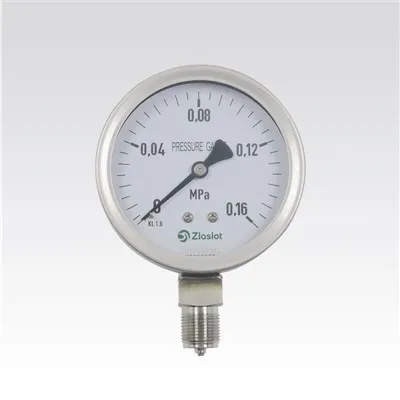

How to choose the right pressure switch?
Leave a message

Selecting the right pressure switch is a crucial decision that can significantly impact the efficiency, safety, and performance of various systems. As a seasoned pressure switches supplier, I've witnessed firsthand the challenges customers face when making this choice. In this blog, I'll share valuable insights to help you navigate the process and choose the pressure switch that best suits your needs.
Understanding Pressure Switches
Before delving into the selection process, it's essential to understand what a pressure switch is and how it works. A pressure switch is an electromechanical device that monitors the pressure of a fluid or gas in a system. When the pressure reaches a pre - set threshold, the switch activates or deactivates an electrical circuit, triggering a specific action such as starting or stopping a pump, opening or closing a valve, or sounding an alarm.
Pressure switches come in various types, including mechanical and electronic. Mechanical pressure switches use a diaphragm, piston, or bellows to detect pressure changes and actuate a mechanical switch. They are simple, reliable, and cost - effective, making them suitable for many applications. Electronic pressure switches, on the other hand, use sensors such as strain gauges or piezoelectric elements to measure pressure and convert it into an electrical signal. They offer higher accuracy, flexibility, and functionality compared to mechanical switches, but they are also more expensive.
Factors to Consider When Choosing a Pressure Switch
1. Pressure Range
The first and most important factor to consider is the pressure range of your application. You need to determine the minimum and maximum pressure values that the switch will encounter during normal operation. Make sure to choose a pressure switch with a pressure range that comfortably covers these values. For example, if your system operates at pressures between 10 and 100 psi, you should select a pressure switch with a range of at least 0 - 150 psi to ensure reliable performance.
2. Set Point and Deadband
The set point is the pressure at which the switch activates or deactivates the electrical circuit. The deadband is the difference between the set point for activation and the set point for deactivation. You need to choose a pressure switch with a set point and deadband that are appropriate for your application. Some applications require a narrow deadband for precise control, while others can tolerate a wider deadband. For instance, in a water pumping system, a narrow deadband ensures that the pump starts and stops at very specific pressure levels, preventing unnecessary cycling.
3. Electrical Rating
The electrical rating of the pressure switch is another critical factor. It includes the voltage, current, and power ratings that the switch can handle. You must ensure that the electrical rating of the switch is compatible with the electrical system in which it will be installed. Using a switch with an insufficient electrical rating can lead to overheating, premature failure, or even electrical hazards. For example, if your system operates at 240V and requires a current of 5A, you need to choose a pressure switch that can handle these electrical parameters.
4. Media Compatibility
The pressure switch will come into contact with the fluid or gas in your system. Therefore, it's essential to choose a switch that is compatible with the media. Different materials are used in the construction of pressure switches, such as stainless steel, brass, and plastic. Some media, like corrosive chemicals or high - temperature fluids, may require special materials to prevent corrosion and damage. For example, if your system uses a corrosive liquid, a pressure switch with a stainless - steel diaphragm and housing would be a suitable choice.
5. Environmental Conditions
Consider the environmental conditions in which the pressure switch will be installed. Factors such as temperature, humidity, vibration, and dust can affect the performance and lifespan of the switch. If the switch will be exposed to high temperatures, choose a model that can withstand the heat. Similarly, if it will be installed in a dusty or wet environment, look for a switch with a high level of protection, such as an IP65 - rated enclosure.
6. Accuracy and Repeatability
Accuracy refers to how closely the switch measures the actual pressure, while repeatability refers to the ability of the switch to provide consistent measurements over multiple cycles. Depending on your application, you may require a high level of accuracy and repeatability. For example, in a laboratory or a precision manufacturing process, a pressure switch with high accuracy and repeatability is essential to ensure reliable operation.


Our Product Offerings
As a pressure switches supplier, we offer a wide range of high - quality pressure switches to meet diverse customer needs.
Our Intelligent Water Air Pneumatic Hydraulic Pump Digital Pressure Switch is a state - of - the - art electronic pressure switch. It features advanced digital technology, allowing for precise pressure measurement and control. With its intelligent design, it can be easily programmed to suit different applications, making it an ideal choice for water, air, pneumatic, and hydraulic systems.
The Hydraulic Pressure Switch is specifically designed for hydraulic systems. It is built to withstand high pressures and harsh operating conditions. The robust construction ensures long - term reliability, and it provides accurate pressure monitoring and control for hydraulic pumps, cylinders, and other components.
Our Smart Digital Pressure Switch offers a combination of high - end features and user - friendly operation. It has a digital display that shows the current pressure, set points, and other important parameters. The switch can be easily configured using a keypad or a computer interface, providing flexibility and convenience for users.
Conclusion
Choosing the right pressure switch is a complex but essential task. By considering factors such as pressure range, set point, electrical rating, media compatibility, environmental conditions, accuracy, and repeatability, you can make an informed decision. At our company, we are committed to providing high - quality pressure switches that meet the diverse needs of our customers. If you have any questions or need assistance in selecting the right pressure switch for your application, please don't hesitate to contact us. We look forward to discussing your requirements and helping you find the perfect solution for your pressure - monitoring needs.
References
- "Pressure Switch Handbook", Industrial Press Inc.
- "Electromechanical Devices: Principles and Applications", McGraw - Hill Education.