
How does a melt pressure indicator work in a chemical process?
Leave a message

Hey there! As a supplier of melt pressure indicators, I'm super excited to dive into how these nifty devices work in a chemical process. So, let's get right into it!
Understanding the Basics
First off, what exactly is a melt pressure indicator? Well, in a chemical process, you often deal with materials in a molten state. These molten substances can have different pressures depending on various factors like temperature, flow rate, and the nature of the chemical reactions taking place. A melt pressure indicator is a device that measures and displays the pressure of these molten materials.
It's kind of like a watch for pressure. Just as a watch tells you the time, a melt pressure indicator tells you the pressure of the melt. This information is crucial because it helps operators monitor and control the chemical process. If the pressure is too high or too low, it can lead to all sorts of problems, like equipment damage, poor product quality, or even safety hazards.
How It Works
Now, let's talk about the nitty - gritty of how a melt pressure indicator actually works. At the heart of most melt pressure indicators is a pressure sensor. This sensor is designed to be in contact with the molten material. When the molten material exerts pressure on the sensor, it causes a physical change in the sensor.
There are different types of pressure sensors used in melt pressure indicators. One common type is the strain - gauge sensor. In a strain - gauge sensor, a thin wire or foil is attached to a diaphragm. When the pressure from the melt pushes against the diaphragm, it deforms slightly. This deformation changes the shape of the strain - gauge wire or foil, which in turn changes its electrical resistance.
The change in electrical resistance is then measured by an electronic circuit within the melt pressure indicator. This circuit converts the change in resistance into a voltage or current signal. The magnitude of this signal is proportional to the pressure of the melt.
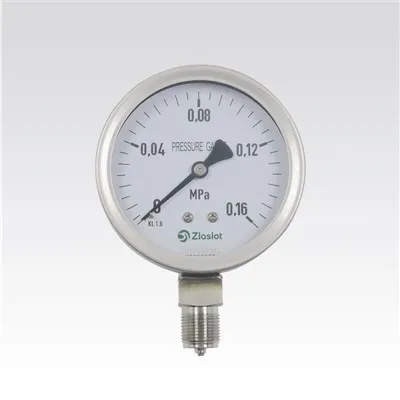
Once the signal is generated, it's sent to the display unit of the melt pressure indicator. The display unit can be a simple analog dial or a more advanced digital screen. On the display, you can see the pressure value in units like pounds per square inch (psi), bars, or kilopascals (kPa).
Role in Chemical Processes
In a chemical process, the melt pressure indicator plays several important roles. For starters, it provides real - time pressure data. Operators can keep an eye on the pressure readings and make adjustments to the process as needed.
For example, in a polymer extrusion process, the melt pressure needs to be carefully controlled. If the pressure is too high, it can cause the extruded polymer to have a non - uniform shape or even break the extrusion die. On the other hand, if the pressure is too low, the polymer may not flow properly through the die, resulting in a poor - quality product.
The melt pressure indicator also helps in ensuring the safety of the chemical process. High pressures can lead to leaks or even explosions in some cases. By constantly monitoring the pressure, operators can take preventive measures before a dangerous situation occurs.
Complementary Devices
A melt pressure indicator doesn't work in isolation. It often works in conjunction with other devices in the chemical process. One such device is the Digital PID Pressure Controller. This controller can take the pressure data from the melt pressure indicator and automatically adjust the process parameters to maintain a set pressure.
Another important device is the Temperature Indicator. Temperature and pressure are closely related in a chemical process. As the temperature of the melt changes, so does its pressure. By monitoring both temperature and pressure, operators can have a more comprehensive understanding of the process and make better - informed decisions.
Our Melt Pressure Indicator
At our company, we offer a top - notch Melt Pressure Indicator. Our indicator is designed with the latest technology to provide accurate and reliable pressure measurements.
It has a high - resolution digital display that makes it easy to read the pressure values. The indicator is also very durable and can withstand the harsh conditions often found in chemical processes, such as high temperatures and corrosive materials.
We've also made sure that our melt pressure indicator is easy to install and maintain. It comes with clear instructions, and our technical support team is always ready to help if you run into any issues.
Why Choose Our Product
There are several reasons why you should choose our melt pressure indicator. Firstly, accuracy is key in a chemical process. Our indicator has a high level of accuracy, which means you can trust the pressure readings it provides.


Secondly, we offer excellent customer service. If you have any questions about the product, installation, or maintenance, our team is just a call or an email away. We'll do our best to solve your problems as quickly as possible.
Finally, our prices are competitive. We understand that cost is an important factor in any business decision. That's why we've tried to offer a high - quality product at a reasonable price.
Time to Make a Decision
If you're in the chemical industry and need a reliable melt pressure indicator, look no further. Our product is designed to meet your needs and help you run your chemical process more efficiently and safely.
Don't hesitate to get in touch with us to discuss your requirements. Whether you're a small - scale chemical producer or a large - scale industrial facility, we have the right solution for you. Let's start a conversation and see how our melt pressure indicator can benefit your business.
References
- "Pressure Measurement in Chemical Processes" - Chemical Engineering Handbook
- "Industrial Sensors and Their Applications" - Sensor Technology Journal