
Can melt pressure gauges be used in leather processing?
Leave a message

Can melt pressure gauges be used in leather processing? This is a question that may not cross the minds of many in the leather industry at first glance, but it's one that holds significant potential for improving the quality and efficiency of leather processing. As a supplier of melt pressure gauges, I am often asked about the applicability of our products in various industries, and leather processing is an area that has piqued the interest of many of our clients. In this blog post, I will explore the possibility of using melt pressure gauges in leather processing, discussing the potential benefits, challenges, and considerations.
Understanding Melt Pressure Gauges
Before delving into their potential use in leather processing, it's essential to understand what melt pressure gauges are and how they work. Melt pressure gauges are instruments designed to measure the pressure of molten materials, such as polymers, plastics, and rubber, during processing. They are commonly used in industries like extrusion, injection molding, and blow molding, where precise control of pressure is crucial for ensuring product quality and consistency.
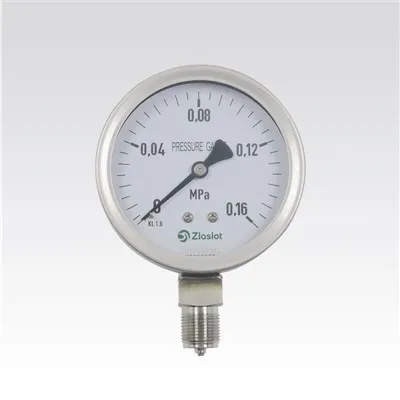
There are different types of melt pressure gauges available in the market, including Digital Melt Presssure Gauges, Mechanical Presssure Gauge, and Vacuum Digital Pressure Gauge. Digital melt pressure gauges offer high accuracy and can provide real-time data, making them ideal for applications where precise pressure monitoring is required. Mechanical pressure gauges, on the other hand, are more traditional and rely on mechanical components to measure pressure. They are often more robust and suitable for harsh environments. Vacuum digital pressure gauges are designed to measure negative pressures and are used in applications where vacuum conditions need to be monitored.
The Leather Processing Industry
Leather processing is a complex and multi - stage industry that involves several steps, including soaking, liming, deliming, bating, tanning, retanning, dyeing, and finishing. Each step requires careful control of various parameters, such as temperature, pH, and chemical concentrations, to ensure the quality and consistency of the final leather product.
Pressure is also an important factor in some aspects of leather processing. For example, during the tanning process, pressure can affect the penetration of tanning agents into the leather fibers. In the finishing stage, pressure may be applied to emboss patterns on the leather surface or to ensure proper adhesion of coatings.
Potential Benefits of Using Melt Pressure Gauges in Leather Processing
- Precise Pressure Control
One of the primary benefits of using melt pressure gauges in leather processing is the ability to achieve precise pressure control. By accurately measuring the pressure applied during different stages of processing, manufacturers can ensure that the leather is treated uniformly and that the desired properties are achieved. For example, in the embossing process, consistent pressure can result in clear and well - defined patterns on the leather surface. - Quality Improvement
Precise pressure control can lead to significant improvements in the quality of leather products. By maintaining the optimal pressure during tanning, the penetration of tanning agents can be optimized, resulting in better - tanned leather with improved strength, durability, and softness. In the finishing stage, proper pressure application can enhance the adhesion of coatings, reducing the risk of peeling or cracking. - Process Optimization
Melt pressure gauges can also help in optimizing the leather processing workflow. By monitoring the pressure in real - time, manufacturers can identify any deviations from the desired pressure levels and make immediate adjustments. This can reduce the amount of waste and rework, improving overall production efficiency.
Challenges and Considerations
- Compatibility with Leather Processing Environments
One of the main challenges of using melt pressure gauges in leather processing is ensuring their compatibility with the processing environment. Leather processing often involves the use of chemicals, such as acids, alkalis, and solvents, which can be corrosive to the materials used in pressure gauges. Therefore, it is essential to select pressure gauges that are made of corrosion - resistant materials, such as stainless steel or special coatings. - Measurement Accuracy in Leather Applications
Leather is a natural material with a complex and heterogeneous structure. Measuring pressure accurately in leather processing can be challenging due to the uneven distribution of pressure across the leather surface. Additionally, the presence of moisture and other substances in the leather can also affect the accuracy of pressure measurements. Special calibration and measurement techniques may be required to ensure reliable pressure data. - Cost - Benefit Analysis
Implementing melt pressure gauges in leather processing requires an investment in equipment and training. Manufacturers need to conduct a cost - benefit analysis to determine whether the benefits of using pressure gauges, such as improved quality and efficiency, outweigh the costs. Factors such as the scale of production, the complexity of the processing operations, and the market demand for high - quality leather products should be considered.
Case Studies and Examples
Although the use of melt pressure gauges in leather processing is not as widespread as in some other industries, there are some cases where they have been successfully applied. For example, a leather manufacturer was experiencing issues with inconsistent embossing patterns on their leather products. By installing a digital melt pressure gauge in the embossing machine and using it to monitor and control the pressure, they were able to achieve more uniform patterns, resulting in a significant increase in customer satisfaction.
Another example is a tannery that was struggling with uneven tanning results. By using a pressure gauge to optimize the pressure during the tanning process, they were able to improve the penetration of tanning agents, leading to better - tanned leather with more consistent color and texture.


Conclusion
In conclusion, while there are challenges to overcome, melt pressure gauges have the potential to bring significant benefits to the leather processing industry. The ability to achieve precise pressure control can lead to improved product quality, process optimization, and ultimately, increased competitiveness in the market.
If you are a leather processor interested in exploring the use of melt pressure gauges in your operations, I encourage you to contact us for more information. Our team of experts can provide you with detailed product specifications, installation guidance, and technical support. We are committed to helping you find the best pressure measurement solutions for your specific needs and to assist you in achieving your production goals.
References
- "Leather Processing Technology" by John Leather.
- "Pressure Measurement in Industrial Processes" by Pressure Experts Inc.
- Industry reports on leather manufacturing and process optimization.