
Can a melt temperature transmitter be used in a textile manufacturing process?
Leave a message

Hey there! As a supplier of Melt Temperature Transmitters, I often get asked if these nifty devices can be used in the textile manufacturing process. Well, let's dive right in and explore this topic.
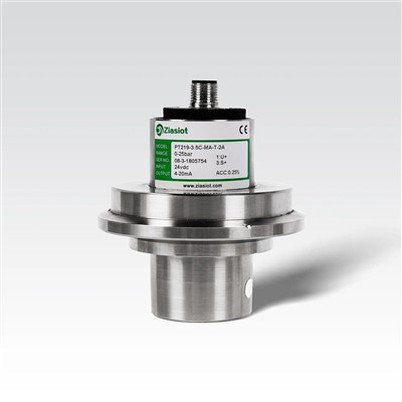
First off, what exactly is a melt temperature transmitter? It's a device that measures the temperature of molten materials. In the context of our business, we've got different types like the Melt Temperature Sensor for Extrusion, the Extruder Melt Temperature Transmitter, and the Integrated Melt Temperature Transmitter. These transmitters are super important in industries where precise temperature control of molten substances is crucial.
Now, let's talk about the textile manufacturing process. Textile production involves a bunch of steps, and many of them deal with polymers in a molten state. For example, in the extrusion process, which is a key part of making synthetic fibers, polymers are melted and then forced through small holes to form filaments. The temperature of the molten polymer during this extrusion is absolutely critical.
If the temperature is too high, the polymer can degrade. This means the quality of the fibers will be poor, with issues like reduced strength, uneven thickness, and a less consistent appearance. On the other hand, if the temperature is too low, the polymer might not flow properly through the extruder. This can lead to clogs in the equipment, production delays, and again, sub - standard fibers.
This is where our melt temperature transmitters come in. They can accurately measure the temperature of the molten polymer in real - time. With this accurate data, textile manufacturers can adjust the heating elements in the extruder to keep the temperature within the optimal range. For instance, if the transmitter shows that the temperature is rising above the set point, the heating system can be adjusted to lower the heat input. Conversely, if the temperature is dropping, more heat can be applied.
Another aspect of textile manufacturing where melt temperature transmitters are useful is in the spinning process. After the extrusion, the filaments are spun into yarns. The properties of the yarn, such as its elasticity and softness, can be affected by the temperature of the molten polymer during spinning. By using our transmitters to maintain the right temperature, manufacturers can produce yarns with consistent quality.
Let's take a look at some of the features of our melt temperature transmitters that make them suitable for textile manufacturing. Firstly, they are designed to be highly accurate. We've spent a lot of time and effort in our R & D to ensure that the measurements are as precise as possible. This accuracy is essential for the fine - tuned temperature control required in textile production.
Secondly, our transmitters are built to be durable. The textile manufacturing environment can be tough, with high temperatures, pressure, and sometimes exposure to chemicals. Our devices are made with high - quality materials that can withstand these harsh conditions. They are also resistant to corrosion, which is important as some of the chemicals used in textile processing can be corrosive.
We also offer transmitters with different response times. In a fast - paced textile manufacturing operation, a quick - response transmitter can provide up - to - the - minute temperature data. This allows for rapid adjustments to the process, minimizing the chances of producing defective products.


Now, I know some of you might be thinking about the cost. Sure, investing in a melt temperature transmitter is an expense, but it's a cost - effective solution in the long run. By preventing product defects and reducing production downtime, these transmitters can actually save textile manufacturers a significant amount of money. For example, if a clog in the extruder due to improper temperature control causes a day - long shutdown, the loss in production can be substantial. With our transmitters, the risk of such shutdowns is greatly reduced.
In addition to the extrusion and spinning processes, melt temperature transmitters can also be useful in other parts of textile manufacturing, like in the production of non - woven fabrics. Non - woven fabrics are made by bonding or felting fibers together, and often involve melting and reforming polymers. The temperature control during these processes is vital for achieving the desired fabric properties, such as its strength and porosity.
We also understand that every textile manufacturing plant is different. That's why we offer customization options for our melt temperature transmitters. Whether you need a specific size, a particular type of connection, or a unique calibration, we can work with you to meet your requirements.
If you're in the textile manufacturing business and are looking to improve the quality of your products, increase production efficiency, and reduce costs, then our melt temperature transmitters are definitely worth considering. We've got a team of experts who can help you choose the right transmitter for your specific needs. We can also provide installation and maintenance support to ensure that your transmitter works smoothly throughout its lifespan.
If you're interested in learning more about how our melt temperature transmitters can benefit your textile manufacturing process, or if you want to discuss a potential purchase, don't hesitate to reach out. We're always happy to have a chat and find the best solution for you.
In conclusion, melt temperature transmitters are not only suitable but also highly beneficial for the textile manufacturing process. They play a crucial role in ensuring the quality and consistency of textile products, while also improving the efficiency of the production process. So, if you're in the textile industry, it's time to consider adding our melt temperature transmitters to your production line.
References:
- General knowledge of textile manufacturing processes and temperature control in industrial applications.
- In - house research and development data on melt temperature transmitters.