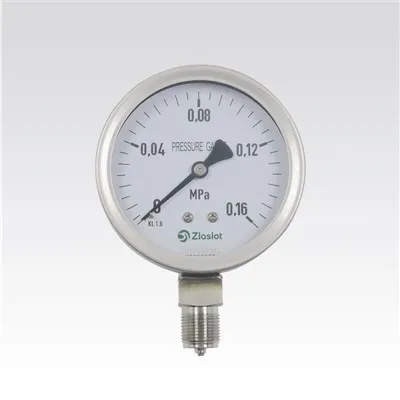

Can a digital pressure gauge be used in a defense application?
Leave a message

In the realm of defense applications, precision, reliability, and adaptability are non - negotiable requirements. The equipment used must withstand extreme conditions, deliver accurate data, and contribute to the overall effectiveness of the mission. One such piece of equipment that plays a crucial but often overlooked role is the digital pressure gauge. But the question remains: Can a digital pressure gauge be used in a defense application? As a supplier of digital pressure gauges, I am uniquely positioned to explore this topic in depth.
Capabilities of Digital Pressure Gauges
Digital pressure gauges are advanced instruments designed to measure pressure with a high degree of accuracy. Unlike traditional mechanical gauges, they utilize electronic sensors to detect pressure changes and convert them into digital readings. This technology offers several key advantages that make them potentially suitable for defense applications.
Accuracy
One of the primary advantages of digital pressure gauges is their high - level accuracy. In defense scenarios, where even the slightest deviation in pressure readings can have significant consequences, accuracy is paramount. For instance, in aircraft hydraulic systems, precise pressure measurement is essential for the proper functioning of control surfaces such as ailerons and rudders. Digital pressure gauges can provide readings with an accuracy of up to ±0.1% or even higher, depending on the model. This level of precision ensures that critical systems operate within safe and optimal parameters.
Programmability
Digital pressure gauges are highly programmable. They can be configured to display pressure in different units (e.g., psi, bar, kPa), set alarm limits, and record data over time. This programmability is extremely useful in defense applications where the requirements may vary widely depending on the specific mission. For example, in a submarine's ballast tank system, operators can program the digital pressure gauge to trigger an alarm if the pressure exceeds a certain threshold, indicating a potential problem such as a leak.
Durability
Modern digital pressure gauges are designed to be highly durable. They are often built with rugged materials that can withstand harsh environmental conditions, including extreme temperatures, high humidity, and vibration. In military vehicles and equipment that are exposed to rough terrains and adverse weather, a durable pressure gauge is essential. For example, in a tank's hydraulic system, the pressure gauge needs to be able to function reliably even when the tank is moving over bumpy terrain or operating in sandy desert conditions.
Defense Applications of Digital Pressure Gauges
Aerospace
In the aerospace industry, digital pressure gauges are used in a variety of applications. In aircraft engines, they monitor the pressure of fuel, oil, and hydraulic fluids. These gauges ensure that the engine operates at the correct pressure levels, which is crucial for efficient performance and safety. In addition, digital pressure gauges are used in the aircraft's cabin pressurization system. They maintain the correct pressure inside the cabin, providing a comfortable and safe environment for passengers and crew at high altitudes.


Naval
On naval vessels, digital pressure gauges play a vital role in numerous systems. In submarines, they are used to monitor the pressure in ballast tanks, which are essential for controlling the submarine's depth. They also monitor the pressure in hydraulic systems that operate the submarine's control surfaces and torpedo tubes. On surface vessels, digital pressure gauges are used in the engine room to monitor the pressure of fuel, lubricants, and cooling water systems.
Land - Based Military Equipment
In land - based military equipment such as tanks and armored vehicles, digital pressure gauges are used in hydraulic systems that control the movement of the tracks, the operation of the turret, and the deployment of weapons. They also monitor the pressure in the vehicle's air - braking system, ensuring safe and reliable braking performance.
Comparison with Mechanical Pressure Gauges
While mechanical pressure gauges have been used for many years in various industries, they have certain limitations when compared to digital pressure gauges. Mechanical gauges are often less accurate than their digital counterparts, especially over long periods or in harsh environments. They are also more prone to mechanical wear and tear, which can lead to inaccurate readings or even failure.
For example, a Mechanical Presssure Gauge may have a limited accuracy range of ±1% or more, and its pointer may become misaligned due to vibration or shock. In contrast, digital pressure gauges are more stable and can maintain their accuracy over a longer period. Additionally, mechanical gauges do not offer the same level of programmability as digital gauges, making them less adaptable to different defense applications.
However, mechanical pressure gauges do have some advantages. They are often simpler in design and can be more cost - effective in some cases. They also do not rely on electrical power, which can be an advantage in situations where power is limited or unreliable.
Specialized Digital Pressure Gauges for Defense
In addition to standard digital pressure gauges, there are also specialized models that are specifically designed for defense applications. For example, a Vacuum Digital Pressure Gauge can be used in applications where vacuum pressure needs to be measured precisely, such as in aerospace components or certain types of military equipment.
There are also High Temperature Mechanical Melt Presssure Gauges that are capable of operating in high - temperature environments. These gauges are used in applications such as rocket engines or high - performance military vehicles where normal pressure gauges would not be able to withstand the extreme heat.
Challenges and Solutions
Despite their many advantages, there are some challenges associated with using digital pressure gauges in defense applications. One of the main challenges is the potential for electronic interference. In military environments, there are often high levels of electromagnetic interference (EMI) from various sources such as radar systems, communication equipment, and electronic warfare devices. This interference can affect the accuracy of the digital pressure gauge's readings.
To address this issue, digital pressure gauges can be designed with shielding and filtering mechanisms to reduce the effects of EMI. Some gauges also use advanced signal - processing algorithms to compensate for any interference that may occur.
Another challenge is the need for regular calibration and maintenance. Digital pressure gauges need to be calibrated periodically to ensure their accuracy. In defense applications, where equipment is often used in remote or harsh locations, it can be difficult to perform regular calibration. To overcome this, some digital pressure gauges are designed with self - calibration features or can be calibrated remotely using wireless technology.
Conclusion
In conclusion, digital pressure gauges can indeed be used in defense applications. Their high accuracy, programmability, and durability make them well - suited for a wide range of mission - critical systems in aerospace, naval, and land - based military equipment. While there are some challenges associated with their use, such as electronic interference and calibration requirements, these challenges can be effectively addressed through advanced design and technology.
As a supplier of digital pressure gauges, we are committed to providing high - quality, reliable products that meet the demanding requirements of the defense industry. If you are involved in defense applications and are interested in learning more about our digital pressure gauges or would like to discuss potential procurement, we welcome you to reach out and start a conversation. Our team of experts is ready to assist you in finding the right solution for your specific needs.
References
- Smith, J. (2018). Pressure Gauge Technology: A Comprehensive Guide. Industrial Instrumentation Press.
- Johnson, R. (2019). Defense Applications of Advanced Sensors. Military Technology Journal.
- Brown, A. (2020). Digital vs. Mechanical Pressure Gauges: A Comparative Analysis. Engineering Review.