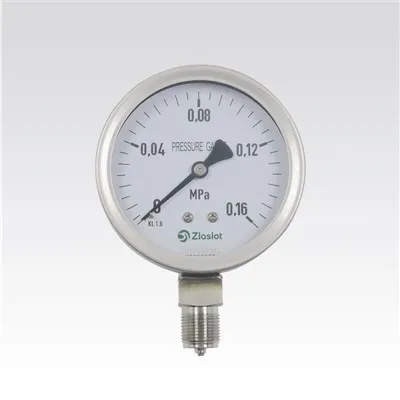

What is the material of the body in a Vortex Flowmeter?
Leave a message

The body material of a vortex flowmeter is a crucial factor that significantly impacts its performance, durability, and suitability for various applications. As a leading supplier of vortex flowmeters, we understand the importance of choosing the right body material to ensure accurate and reliable flow measurement. In this blog post, we will explore the different materials used in the construction of vortex flowmeter bodies, their properties, and the applications for which they are best suited.
Common Body Materials for Vortex Flowmeters
Stainless Steel
Stainless steel is one of the most widely used materials for vortex flowmeter bodies. It offers excellent corrosion resistance, making it suitable for a wide range of applications in industries such as chemical processing, food and beverage, and pharmaceuticals. Stainless steel is also known for its high strength and durability, which ensures long-term reliability in harsh operating conditions.
There are several grades of stainless steel available, with 304 and 316 being the most common. Grade 304 stainless steel is a general-purpose alloy that provides good corrosion resistance in most environments. It contains 18% chromium and 8% nickel, which gives it its characteristic strength and corrosion resistance. Grade 316 stainless steel, on the other hand, is a more corrosion-resistant alloy that contains 2% to 3% molybdenum. This additional element enhances the alloy's resistance to pitting and crevice corrosion, making it ideal for applications in aggressive chemical environments.
Carbon Steel
Carbon steel is another popular choice for vortex flowmeter bodies, especially in applications where cost is a major consideration. It offers good mechanical properties and is relatively easy to machine, making it a cost-effective option for large-scale production. However, carbon steel is susceptible to corrosion, especially in environments with high humidity or exposure to chemicals. Therefore, it is often coated or lined with a corrosion-resistant material to protect it from the elements.
Galvanized carbon steel is a common option for applications where corrosion resistance is required. The galvanization process involves coating the steel with a layer of zinc, which provides a sacrificial barrier against corrosion. Another option is to use epoxy-coated carbon steel, which provides a more durable and chemical-resistant coating than galvanization.
Aluminum
Aluminum is a lightweight and corrosion-resistant material that is often used in applications where weight is a concern. It is commonly used in the aerospace and automotive industries, as well as in some industrial applications. Aluminum vortex flowmeters are typically less expensive than those made from stainless steel or carbon steel, but they may not be suitable for applications in harsh or corrosive environments.
Aluminum has good thermal conductivity, which can be beneficial in applications where temperature variations are common. It is also easy to machine and form, which allows for the production of complex shapes and designs. However, aluminum is a relatively soft metal, which means that it may be more prone to damage or wear than other materials.
Plastic
Plastic materials are increasingly being used in the construction of vortex flowmeter bodies, especially in applications where chemical resistance and low weight are required. Plastic flowmeters are typically less expensive than those made from metal, and they can be molded into complex shapes and designs.


There are several types of plastic materials available, including polyvinyl chloride (PVC), polypropylene (PP), and polytetrafluoroethylene (PTFE). PVC is a common plastic material that is used in a wide range of applications, including water treatment, chemical processing, and food and beverage. It offers good chemical resistance and is relatively inexpensive. PP is a more durable and heat-resistant plastic material that is often used in applications where high temperatures or harsh chemicals are present. PTFE is a high-performance plastic material that offers excellent chemical resistance and low friction. It is commonly used in applications where the flow of corrosive or viscous fluids is measured.
Factors to Consider When Choosing a Body Material
When choosing a body material for a vortex flowmeter, several factors should be considered, including the following:
Chemical Compatibility
The body material of the flowmeter must be compatible with the fluid being measured. This means that it should not react with the fluid or be corroded by it. For example, if the fluid being measured is a strong acid or base, a corrosion-resistant material such as stainless steel or PTFE should be used.
Temperature and Pressure
The body material must be able to withstand the temperature and pressure conditions of the application. For example, if the application involves high temperatures or pressures, a high-strength material such as stainless steel or carbon steel should be used.
Abrasion Resistance
If the fluid being measured contains abrasive particles, the body material must be resistant to abrasion. This means that it should not be easily worn or scratched by the particles. For example, if the fluid contains sand or other abrasive materials, a hard and durable material such as ceramic or tungsten carbide may be required.
Hygiene Requirements
In applications where hygiene is a concern, such as in the food and beverage or pharmaceutical industries, the body material must be easy to clean and disinfect. Stainless steel is a popular choice for these applications because it is non-toxic, easy to clean, and resistant to corrosion.
Cost
The cost of the body material is also an important factor to consider. In general, plastic materials are less expensive than metal materials, but they may not be suitable for all applications. Stainless steel is a more expensive material, but it offers excellent corrosion resistance and durability, which can result in lower long-term costs.
Applications of Different Body Materials
The choice of body material for a vortex flowmeter depends on the specific application requirements. Here are some common applications and the recommended body materials:
Chemical Processing
In the chemical processing industry, vortex flowmeters are used to measure the flow of a wide range of chemicals, including acids, bases, solvents, and polymers. Stainless steel is the most commonly used body material for these applications because it offers excellent corrosion resistance and can withstand the harsh chemical environments.
Food and Beverage
In the food and beverage industry, vortex flowmeters are used to measure the flow of liquids such as water, milk, juice, and beer. Stainless steel is the preferred body material for these applications because it is non-toxic, easy to clean, and meets the hygiene requirements of the industry.
Oil and Gas
In the oil and gas industry, vortex flowmeters are used to measure the flow of crude oil, natural gas, and other hydrocarbons. Carbon steel is a common body material for these applications because it offers good mechanical properties and is relatively inexpensive. However, in applications where corrosion resistance is required, stainless steel or coated carbon steel may be used.
Water and Wastewater
In the water and wastewater industry, vortex flowmeters are used to measure the flow of water, sewage, and other liquids. Plastic materials such as PVC and PP are commonly used for these applications because they are corrosion-resistant, lightweight, and inexpensive.
Conclusion
The body material of a vortex flowmeter is a critical component that can affect its performance, durability, and suitability for various applications. As a supplier of vortex flowmeters, we offer a wide range of body materials to meet the specific needs of our customers. Whether you need a corrosion-resistant stainless steel flowmeter for a chemical processing application or a lightweight plastic flowmeter for a water treatment application, we have the solution for you.
If you are interested in learning more about our vortex flowmeters or need help choosing the right body material for your application, please contact us. Our team of experts will be happy to assist you in selecting the best flowmeter for your needs. You can also explore our other flowmeter products, such as the LDG Electromagnetic Flowmeter and the Turbine Flow Meter, by visiting our website. For more information on our Vortex Flowmeter, please click on the link.
References
- "Flow Measurement Handbook: Principles and Applications" by Richard W. Miller
- "Industrial Flow Measurement" by David W. Spitzer
- "Vortex Flowmeters: Principles, Design, and Applications" by John A. Swithenbank