
What are the standards for Indicator and Controller design?
Leave a message

In the realm of industrial automation and process control, indicators and controllers play a pivotal role. As a dedicated supplier of indicators and controllers, I've had the privilege of witnessing firsthand the transformative impact these devices have on various industries. From ensuring precise temperature regulation in manufacturing processes to maintaining optimal pressure levels in chemical plants, indicators and controllers are the unsung heroes that keep operations running smoothly. In this blog post, I'll delve into the key standards for indicator and controller design, sharing insights that can help businesses make informed decisions when selecting these crucial components.
Accuracy and Precision
One of the most fundamental standards for indicator and controller design is accuracy and precision. Accuracy refers to how close a measured value is to the true value, while precision relates to the consistency of repeated measurements. In industrial applications, even the slightest deviation can have significant consequences, leading to product defects, equipment damage, or safety hazards. Therefore, indicators and controllers must be designed to provide highly accurate and precise readings.
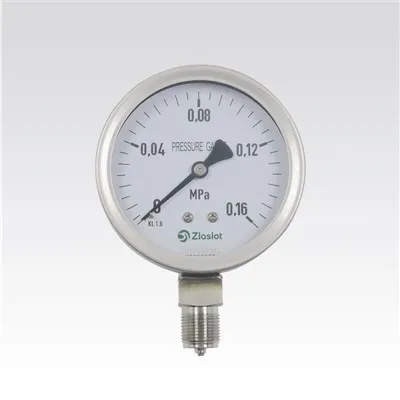
To achieve this, manufacturers employ advanced sensor technologies and calibration techniques. For example, in the case of Melt Pressure Indicator, high-quality pressure sensors are used to detect even the smallest changes in pressure. These sensors are then calibrated to ensure that the readings are accurate within a specified tolerance range. Additionally, signal processing algorithms are implemented to filter out noise and interference, further enhancing the accuracy and precision of the measurements.
Reliability and Durability
Reliability and durability are also critical standards for indicator and controller design. Industrial environments can be harsh, with exposure to extreme temperatures, humidity, vibration, and electrical noise. Indicators and controllers must be able to withstand these conditions and continue to operate reliably over an extended period.
To ensure reliability, manufacturers use high-quality components and robust construction techniques. For instance, the enclosures of indicators and controllers are often made of rugged materials such as stainless steel or aluminum, which provide protection against physical damage and environmental factors. Additionally, the internal components are designed to be resistant to corrosion, moisture, and dust, ensuring long-term performance.
In terms of durability, indicators and controllers are subjected to rigorous testing procedures to simulate real-world conditions. These tests include temperature cycling, vibration testing, and electromagnetic compatibility (EMC) testing. By passing these tests, manufacturers can guarantee that their products will perform reliably in even the most demanding industrial environments.
User-Friendliness
User-friendliness is another important standard for indicator and controller design. In industrial settings, operators need to be able to quickly and easily understand the readings and settings of indicators and controllers. A complex or difficult-to-use interface can lead to errors and inefficiencies, which can have a negative impact on productivity and safety.
To enhance user-friendliness, manufacturers design indicators and controllers with intuitive interfaces. This includes large, easy-to-read displays, clear labeling, and simple navigation menus. Additionally, features such as touchscreens and programmable buttons can make it easier for operators to interact with the devices.
Another aspect of user-friendliness is the ability to customize the settings and functions of indicators and controllers. Different industrial applications may have different requirements, and operators need to be able to tailor the devices to meet their specific needs. Manufacturers often provide software tools that allow users to configure the settings, such as alarm thresholds, control parameters, and display units.
Compatibility and Integration
In today's interconnected industrial landscape, indicators and controllers need to be compatible with other devices and systems. This includes sensors, actuators, programmable logic controllers (PLCs), and human-machine interfaces (HMIs). Compatibility and integration are essential for seamless communication and coordination between different components of an industrial automation system.
To ensure compatibility, manufacturers design indicators and controllers with standard communication protocols. These protocols include Modbus, Profibus, Ethernet/IP, and CANopen, among others. By supporting these protocols, indicators and controllers can easily communicate with other devices and systems, allowing for real-time data exchange and control.
In addition to communication protocols, manufacturers also provide software drivers and libraries that make it easier to integrate indicators and controllers into existing systems. These drivers and libraries can be used with popular programming languages and development environments, such as Python, C++, and LabVIEW.
Safety and Compliance
Safety is of utmost importance in industrial applications, and indicators and controllers must be designed to meet strict safety standards. This includes protection against electrical shock, overheating, and short circuits. Additionally, indicators and controllers may need to comply with specific industry regulations and standards, such as UL, CE, and CSA.
To ensure safety, manufacturers incorporate safety features into the design of indicators and controllers. These features may include overvoltage protection, overcurrent protection, and ground fault protection. Additionally, the devices are often designed to be fail-safe, meaning that they will automatically shut down or enter a safe mode in the event of a fault or malfunction.
In terms of compliance, manufacturers work closely with regulatory bodies to ensure that their products meet the relevant standards and regulations. This includes conducting regular testing and certification procedures to verify the safety and performance of the devices.
Energy Efficiency
Energy efficiency is becoming an increasingly important standard for indicator and controller design. In today's energy-conscious world, businesses are looking for ways to reduce their energy consumption and carbon footprint. Indicators and controllers can play a role in this by using energy-efficient components and design techniques.
To improve energy efficiency, manufacturers use low-power components and optimize the power consumption of the devices. This includes using energy-efficient microcontrollers, sensors, and displays. Additionally, features such as sleep modes and automatic power-off can be implemented to reduce energy consumption when the devices are not in use.


Conclusion
In conclusion, the design of indicators and controllers is governed by a number of important standards, including accuracy and precision, reliability and durability, user-friendliness, compatibility and integration, safety and compliance, and energy efficiency. By adhering to these standards, manufacturers can ensure that their products meet the needs of industrial customers and provide reliable, high-performance solutions for a wide range of applications.
As a supplier of indicators and controllers, we are committed to meeting and exceeding these standards. Our products are designed and manufactured using the latest technologies and highest quality components, ensuring accuracy, reliability, and user-friendliness. We also offer a wide range of communication protocols and software tools to ensure compatibility and integration with other devices and systems.
If you're in the market for indicators and controllers, we invite you to contact us to discuss your specific requirements. Our team of experts will be happy to help you select the right products for your application and provide you with the support and service you need to ensure a successful implementation.
References
- [1] "Industrial Automation Handbook," Third Edition, by Thomas H. Lee and Robert W. Erickson
- [2] "Process Control Instrumentation Technology," Eighth Edition, by Curtis D. Johnson
- [3] "Control Systems Engineering," Fourth Edition, by Norman S. Nise