
How does a melt pressure indicator work in a rubber processing industry?
Leave a message

Hey there! As a supplier of melt pressure indicators, I'm super excited to dive into how these nifty devices work in the rubber processing industry. Let's get started!
Understanding the Basics of Melt Pressure in Rubber Processing
Before we jump into how the melt pressure indicator works, it's important to understand why melt pressure matters in rubber processing. Rubber compounds are heated and melted to make them malleable for shaping into various products, like tires, hoses, and seals. During this process, the pressure of the molten rubber is a crucial parameter. It affects the quality of the final product, the efficiency of the production process, and even the safety of the equipment.


If the melt pressure is too low, the rubber might not fill the mold properly, leading to defects like voids or thin spots. On the other hand, if the pressure is too high, it can cause excessive stress on the equipment, leading to wear and tear, and even potential safety hazards. That's where the melt pressure indicator comes in handy.
How a Melt Pressure Indicator Works
A melt pressure indicator is a device that measures the pressure of the molten rubber in the processing equipment, such as an extruder or an injection molding machine. There are different types of melt pressure indicators, but most of them work on the principle of converting the mechanical force exerted by the molten rubber into an electrical signal.
The Sensing Element
The heart of a melt pressure indicator is the sensing element. This is usually a diaphragm or a strain gauge. When the molten rubber exerts pressure on the sensing element, it deforms slightly. The amount of deformation is proportional to the pressure of the molten rubber.
For example, in a diaphragm-based sensing element, the diaphragm is a thin, flexible membrane that is in contact with the molten rubber. As the pressure increases, the diaphragm bends, and this bending is detected by a sensor. In a strain gauge-based sensing element, the strain gauge is a thin wire or a semiconductor that changes its electrical resistance when it is stretched or compressed. When the molten rubber exerts pressure on the strain gauge, it changes its shape, and this change in shape causes a change in its electrical resistance.
Signal Conversion
Once the sensing element detects the pressure and converts it into a mechanical deformation, the next step is to convert this mechanical deformation into an electrical signal. This is done by a signal conditioner or an amplifier. The signal conditioner amplifies the small electrical signal generated by the sensing element and converts it into a standard electrical signal, such as a voltage or a current.
For instance, if the sensing element generates a small voltage change due to the pressure-induced deformation, the signal conditioner will amplify this voltage change and convert it into a 4-20 mA current signal or a 0-10 V voltage signal. These standard electrical signals are easy to transmit and process by other devices, such as controllers or displays.
Display and Output
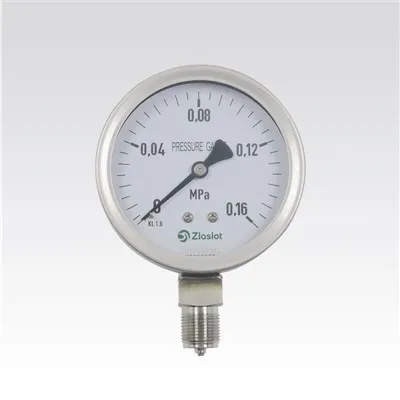
The final step in the operation of a melt pressure indicator is to display the measured pressure and provide an output signal for further processing. The display can be a digital display or an analog display. A digital display shows the pressure value in numerical form, while an analog display shows the pressure value as a position on a scale.
The output signal can be used for various purposes, such as controlling the speed of the extruder or the injection molding machine, alarming the operator if the pressure exceeds a certain limit, or recording the pressure data for quality control purposes.
Importance of Melt Pressure Indicators in Rubber Processing
Now that we know how a melt pressure indicator works, let's talk about why it's so important in the rubber processing industry.
Quality Control
As I mentioned earlier, the melt pressure affects the quality of the final rubber product. By accurately measuring the melt pressure, manufacturers can ensure that the rubber is processed at the right pressure, which helps to produce high-quality products with consistent properties. For example, in tire manufacturing, the melt pressure needs to be carefully controlled to ensure that the tire has the right tread pattern, the right thickness, and the right strength.
Process Efficiency
Melt pressure indicators also help to improve the efficiency of the rubber processing process. By monitoring the melt pressure in real-time, operators can adjust the processing parameters, such as the temperature, the speed, and the feed rate, to optimize the process. This can help to reduce waste, increase productivity, and save energy.
Equipment Protection
Another important benefit of using melt pressure indicators is that they help to protect the processing equipment. If the melt pressure exceeds the safe operating limit of the equipment, the melt pressure indicator can send an alarm signal to the operator, who can then take appropriate action to prevent damage to the equipment. This can help to extend the lifespan of the equipment and reduce maintenance costs.
Our Melt Pressure Indicators
At our company, we offer a wide range of high-quality melt pressure indicators that are specifically designed for the rubber processing industry. Our Melt Pressure Indicator is a state-of-the-art device that provides accurate and reliable pressure measurements. It features a high-resolution digital display, a wide operating temperature range, and a robust construction that can withstand the harsh environment of rubber processing.
In addition to our melt pressure indicators, we also offer other related products, such as Temperature Indicator and Digital Hydraulic Pressure Gauge. These products can be used together with our melt pressure indicators to provide a comprehensive monitoring and control solution for the rubber processing industry.
Contact Us for Procurement
If you're in the rubber processing industry and you're looking for a reliable melt pressure indicator or other related products, we'd love to hear from you. Our team of experts is always ready to help you choose the right product for your specific needs and provide you with the best service. Whether you're a small-scale manufacturer or a large industrial enterprise, we can offer you the products and solutions that you need to improve your rubber processing operations.
So, don't hesitate to reach out to us for procurement and let's start a great business relationship. We're confident that our products will meet your expectations and help you achieve your business goals.
References
- Rubber Processing Handbook, by the Rubber Manufacturers Association
- Industrial Instrumentation and Control Handbook, by B.C. Nakra and K.K. Chaudhry