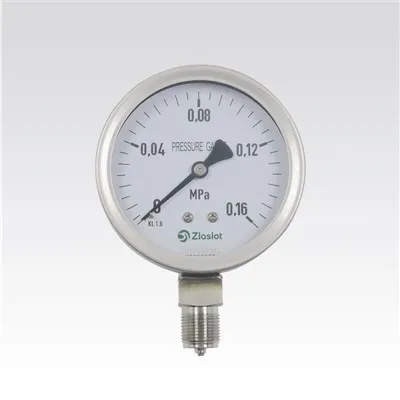

Can a Compact Pressure Transmitter measure relative pressure?
Leave a message

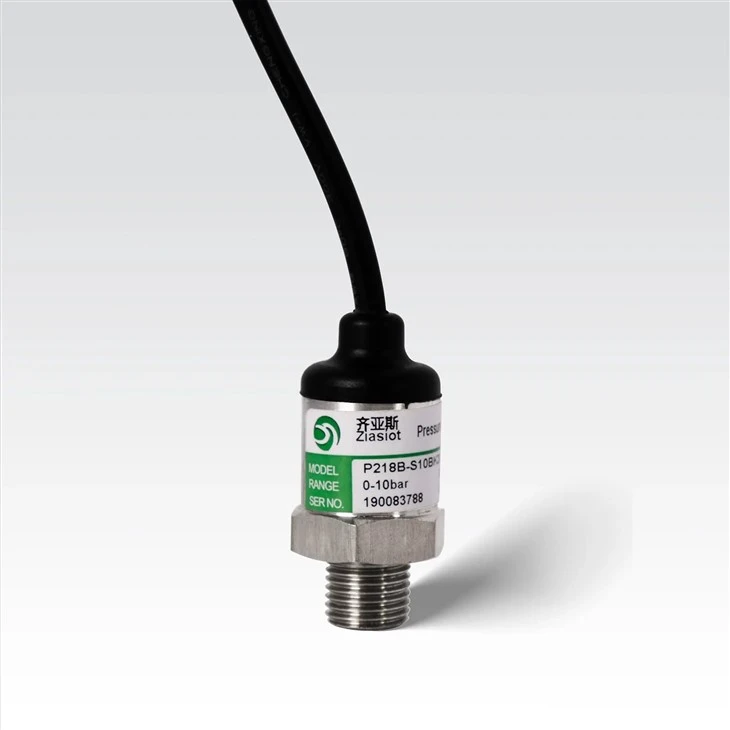
In the realm of industrial instrumentation, pressure measurement is a fundamental aspect that impacts a wide range of applications, from manufacturing processes to environmental monitoring. Among the various types of pressure transmitters available in the market, compact pressure transmitters have gained significant popularity due to their space-saving design, high performance, and cost - effectiveness. A common question that arises is whether a compact pressure transmitter can measure relative pressure. In this blog post, as a supplier of compact pressure transmitters, I will delve into this topic to provide a comprehensive answer.
Understanding Pressure Measurement Basics
Before we discuss whether a compact pressure transmitter can measure relative pressure, it is essential to understand the different types of pressure. There are three main types of pressure measurements: absolute pressure, gauge pressure (a form of relative pressure), and differential pressure.
Absolute pressure is measured relative to a perfect vacuum. An Absolute Pressure Transmitter is specifically designed to measure this type of pressure. It provides a reading that includes the atmospheric pressure, making it suitable for applications where the absolute value of pressure is critical, such as in high - altitude aviation or deep - sea exploration.
Relative pressure, on the other hand, is measured relative to a reference pressure. Gauge pressure is the most common form of relative pressure, where the reference is the local atmospheric pressure. Differential pressure is another form of relative pressure, which is the difference in pressure between two points.
How Compact Pressure Transmitters Work
Compact pressure transmitters are designed to convert pressure into an electrical signal, typically a 4 - 20 mA or 0 - 5 V output. They use various sensing technologies, such as strain - gauge, capacitive, or piezoelectric sensors, to detect changes in pressure.
The basic working principle involves the deformation of a sensing element due to the applied pressure. This deformation is then converted into an electrical signal through a transduction mechanism. For example, in a strain - gauge - based compact pressure transmitter, the strain gauge changes its resistance when the sensing diaphragm is deformed by the pressure. This change in resistance is then measured and converted into a proportional electrical signal.
Measuring Relative Pressure with Compact Pressure Transmitters
The answer to the question "Can a compact pressure transmitter measure relative pressure?" is a resounding yes. Most compact pressure transmitters can be configured to measure relative pressure, specifically gauge pressure.
To measure gauge pressure, the compact pressure transmitter is designed to have an open port that is exposed to the local atmospheric pressure. The sensing element then measures the difference between the applied pressure and the atmospheric pressure. This difference is the gauge pressure.
For example, in a pneumatic system, a compact pressure transmitter can be installed to measure the pressure of the compressed air relative to the atmospheric pressure. The transmitter will provide a reading that indicates how much the pressure of the compressed air exceeds the atmospheric pressure.
In addition to gauge pressure, some compact pressure transmitters can also measure differential pressure. These transmitters have two pressure ports, and they measure the difference in pressure between the two ports. This is useful in applications such as flow measurement, where the differential pressure across an orifice plate or a venturi tube is proportional to the flow rate of the fluid.
Advantages of Using Compact Pressure Transmitters for Relative Pressure Measurement
There are several advantages to using compact pressure transmitters for relative pressure measurement.
Space - Saving Design
As the name suggests, compact pressure transmitters have a small form factor, which makes them ideal for applications where space is limited. They can be easily installed in tight spaces, such as in small machinery or in control panels.
High Accuracy
Modern compact pressure transmitters are capable of providing high - accuracy measurements. They use advanced sensing technologies and signal - processing algorithms to ensure that the measured relative pressure is accurate and reliable.
Cost - Effectiveness
Compact pressure transmitters are generally more cost - effective than larger, more complex pressure measurement devices. They offer a good balance between performance and cost, making them a popular choice for a wide range of applications.
Versatility
Many compact pressure transmitters are versatile and can be configured to measure different types of pressure, including relative pressure, absolute pressure, and differential pressure. This flexibility allows users to use the same transmitter for multiple applications, reducing the need for multiple measurement devices.
Applications of Compact Pressure Transmitters for Relative Pressure Measurement
Compact pressure transmitters are used in a wide range of applications where relative pressure measurement is required.

HVAC Systems
In heating, ventilation, and air - conditioning (HVAC) systems, compact pressure transmitters are used to measure the pressure of the air or the refrigerant. By measuring the relative pressure, the system can be optimized for energy efficiency and comfort. For example, the pressure difference across a filter in an HVAC system can be measured to determine when the filter needs to be replaced.
Hydraulic Systems
In hydraulic systems, compact pressure transmitters are used to monitor the pressure of the hydraulic fluid. This helps in ensuring the proper operation of the system and preventing damage due to over - pressure. The relative pressure measurement can also be used to control the flow rate of the hydraulic fluid.
Industrial Automation
In industrial automation, compact pressure transmitters are used in various processes, such as in chemical manufacturing, food and beverage production, and pharmaceutical manufacturing. They are used to measure the pressure of gases and liquids in pipelines, tanks, and reactors. The relative pressure measurement is crucial for process control and quality assurance.
Special Considerations for Relative Pressure Measurement
While compact pressure transmitters are capable of measuring relative pressure, there are some special considerations that need to be taken into account.
Atmospheric Pressure Variations
Since gauge pressure is measured relative to the local atmospheric pressure, variations in atmospheric pressure can affect the measurement. For example, changes in weather conditions or altitude can cause the atmospheric pressure to change. In applications where high - accuracy relative pressure measurement is required, it may be necessary to compensate for these variations.
Installation Location
The installation location of the compact pressure transmitter can also affect the relative pressure measurement. It is important to ensure that the open port of the transmitter, which is exposed to the atmospheric pressure, is not blocked or affected by local air currents. Additionally, the transmitter should be installed in a location where it is not exposed to excessive vibration or temperature variations, as these can also affect the accuracy of the measurement.
Conclusion
In conclusion, a compact pressure transmitter can indeed measure relative pressure, including gauge pressure and differential pressure. These transmitters offer several advantages, such as space - saving design, high accuracy, cost - effectiveness, and versatility. They are widely used in various applications, including HVAC systems, hydraulic systems, and industrial automation.
If you are in need of a reliable and accurate compact pressure transmitter for relative pressure measurement, we are here to help. Our company offers a wide range of compact pressure transmitters that can be customized to meet your specific requirements. Whether you need a Standard Silicon Pressure Transmitter for general - purpose applications or an Explosion Proof Pressure Transmitter for hazardous environments, we have the solution for you.
We invite you to contact us to discuss your pressure measurement needs and explore how our compact pressure transmitters can enhance the performance of your systems. Our team of experts is ready to provide you with technical support and guidance throughout the purchasing process.
References
- "Pressure Measurement Handbook" by John Blackburn
- "Industrial Instrumentation and Control Systems" by Bela Liptak
- Technical documents from leading pressure transmitter manufacturers