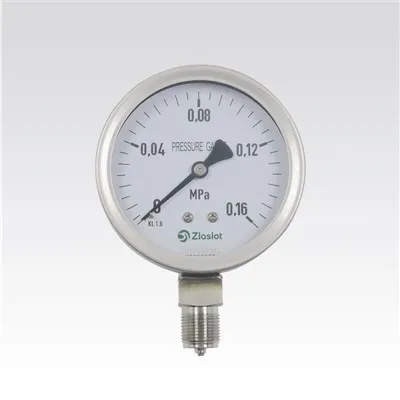

How accurate are ceramic pressure transmitters?
Leave a message

Hey there! As a supplier of Ceramic Pressure Transmitters, I often get asked about how accurate these little gadgets really are. So, I thought I'd take a deep dive into the topic and share some insights with you.
First off, let's understand what ceramic pressure transmitters are. They're devices that measure pressure and convert it into an electrical signal. These transmitters are widely used in various industries like automotive, HVAC, and industrial automation because of their durability, reliability, and cost - effectiveness.
What Affects the Accuracy of Ceramic Pressure Transmitters?
1. Sensor Technology
The heart of a ceramic pressure transmitter is its sensor. Most ceramic sensors work on the principle of piezoresistivity. When pressure is applied to the ceramic diaphragm, it deforms slightly, and this deformation causes a change in the electrical resistance of the piezoresistive elements on the diaphragm.
The quality of the ceramic material used is crucial. High - grade ceramic materials have better mechanical and electrical properties. For example, they are less likely to be affected by temperature changes and mechanical stress. A well - made ceramic sensor can provide highly accurate pressure measurements over a wide range of pressures.
2. Temperature Effects
Temperature is one of the biggest enemies of accuracy in pressure transmitters. As the temperature changes, the ceramic diaphragm can expand or contract, which can lead to false pressure readings.
To combat this, many modern ceramic pressure transmitters come with temperature compensation. This can be achieved through either hardware or software methods. Hardware compensation usually involves using additional temperature - sensitive components in the circuit to correct the output signal based on the temperature. Software compensation, on the other hand, uses algorithms to adjust the readings according to the temperature data collected by an on - board temperature sensor.
3. Calibration
Calibration is like tuning a musical instrument. It's the process of adjusting the pressure transmitter to ensure that its output accurately corresponds to the actual pressure being measured.
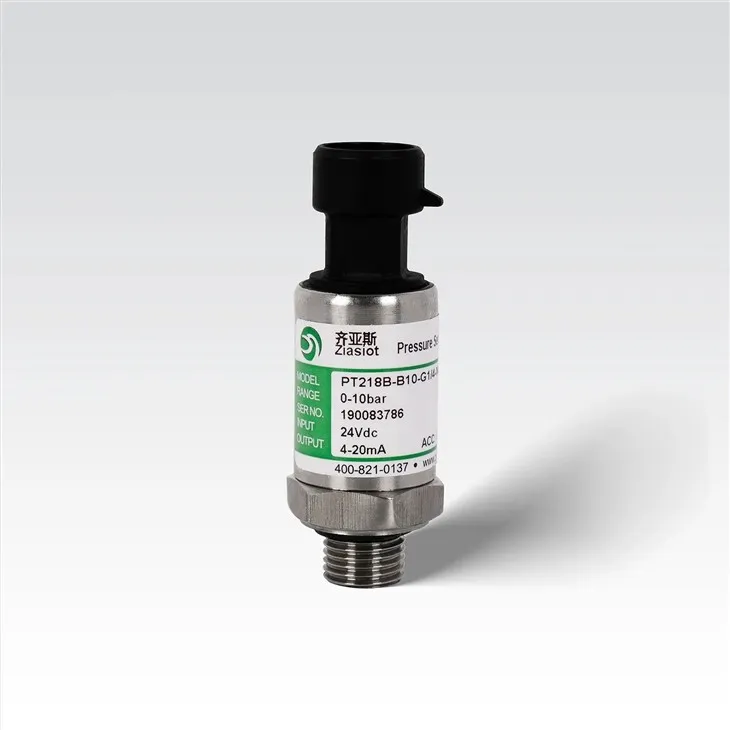

Regular calibration is essential for maintaining accuracy. Over time, factors like wear and tear, environmental conditions, and electrical drift can cause the transmitter to deviate from its original calibration. A good calibration process involves comparing the transmitter's output to a known pressure standard and making the necessary adjustments.
How Accurate Can They Really Be?
The accuracy of ceramic pressure transmitters can vary depending on the model and the application. In general, high - quality ceramic pressure transmitters can achieve an accuracy of ±0.1% to ±0.5% of the full - scale output.
For some standard applications, an accuracy of ±0.5% might be sufficient. For example, in a simple HVAC system, this level of accuracy can be used to control the air pressure in the ducts. However, in more critical applications like aerospace or medical devices, a higher accuracy of ±0.1% or even better might be required.
Let's take a look at some of our products to see how they stack up in terms of accuracy.
Standard Ceramic Pressure Transmitter
Our Standard Ceramic Pressure Transmitter is designed for general - purpose applications. It offers a good balance between accuracy and cost. With an accuracy of around ±0.3% of the full - scale output, it can be used in a wide range of industrial and commercial applications.
Anti - Crossive Pressure Transmitter
The Anti - Crossive Pressure Transmitter is built to handle harsh environments. It has a special design that reduces the effects of cross - talk and interference. This transmitter can achieve an accuracy of up to ±0.2% of the full - scale output, making it suitable for applications where high accuracy is required in tough conditions.
Refrigeration Pressure Transmitter
Our Refrigeration Pressure Transmitter is specifically designed for the refrigeration industry. It has excellent temperature compensation and can maintain an accuracy of ±0.25% of the full - scale output. This is important in refrigeration systems, where precise pressure control is needed to ensure efficient operation.
Ensuring Long - Term Accuracy
To ensure that your ceramic pressure transmitters maintain their accuracy over the long term, there are a few things you can do.
First, make sure to install the transmitter correctly. Incorrect installation can cause mechanical stress on the diaphragm, which can affect the accuracy. Follow the manufacturer's installation instructions carefully.
Second, keep the transmitter clean. Dust, dirt, and other contaminants can accumulate on the diaphragm and affect its performance. Regular cleaning can help prevent this.
Finally, as mentioned earlier, perform regular calibration. Set up a calibration schedule based on the application and the manufacturer's recommendations.
Conclusion
So, how accurate are ceramic pressure transmitters? Well, it depends on a variety of factors, but high - quality ones can be very accurate, with some achieving an accuracy of up to ±0.1% of the full - scale output.
If you're in the market for a ceramic pressure transmitter, consider your application requirements. Whether you need a standard transmitter for general use, an anti - crossive one for harsh environments, or a refrigeration - specific transmitter, we've got you covered.
If you're interested in learning more about our products or want to discuss your specific needs, feel free to reach out. We're here to help you find the right ceramic pressure transmitter for your application and ensure that you get the most accurate pressure measurements possible.
References
- [List relevant books, industry standards, or technical papers here. For example: "Pressure Measurement Handbook" by John Doe, 20XX]