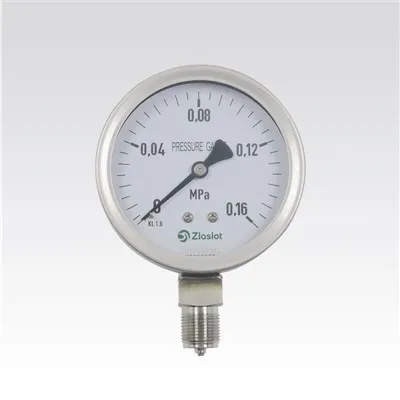

Can ceramic pressure transmitters be used in pneumatic systems?
Leave a message

Can ceramic pressure transmitters be used in pneumatic systems? This is a question that many engineers, technicians, and decision - makers in the industrial field often ask. As a supplier of Ceramic Pressure Transmitters, I'm here to share in - depth insights on this topic.
Understanding Ceramic Pressure Transmitters
Ceramic pressure transmitters are devices that measure pressure and convert it into an electrical signal. They are based on the principle of piezoresistivity. When pressure is applied to a ceramic diaphragm, it causes a change in resistance, which can then be measured and translated into a pressure value. These transmitters are known for their high accuracy, long - term stability, and excellent corrosion resistance.
The ceramic material used in these transmitters has unique properties. It is extremely hard, which allows it to withstand high pressures without significant deformation. Additionally, ceramic is chemically inert, making it suitable for use in a wide range of harsh environments, including those with corrosive substances.
Pneumatic Systems: An Overview
Pneumatic systems use compressed air to transmit and control energy. They are widely used in various industries, such as manufacturing, automotive, and food processing. In a pneumatic system, air is compressed and then used to power actuators, valves, and other components.
The key requirements for pressure measurement in pneumatic systems include accuracy, reliability, and the ability to respond quickly to pressure changes. Accurate pressure measurement is crucial for ensuring the proper operation of pneumatic components and for maintaining the overall efficiency and safety of the system.


Suitability of Ceramic Pressure Transmitters in Pneumatic Systems
Accuracy
One of the main advantages of using ceramic pressure transmitters in pneumatic systems is their high accuracy. Pneumatic systems often require precise pressure control, and ceramic transmitters can provide measurements with a high degree of precision. They can accurately detect small changes in pressure, which is essential for applications where fine - tuned control is necessary. For example, in a pneumatic robotic arm, accurate pressure measurement can ensure smooth and precise movement.
Reliability
Ceramic pressure transmitters are highly reliable. The ceramic diaphragm is resistant to wear and tear, and the overall design of the transmitter is robust. This means that they can operate continuously in a pneumatic system without frequent breakdowns. In industrial settings, where downtime can be costly, the reliability of pressure transmitters is of utmost importance.
Response Time
Pneumatic systems often experience rapid pressure changes. Ceramic pressure transmitters have a fast response time, allowing them to quickly detect and report these changes. This is crucial for maintaining the stability and safety of the system. For instance, in a pneumatic valve control system, a fast - responding pressure transmitter can ensure that the valve opens and closes at the right time, preventing over - or under - pressurization.
Compatibility with Compressed Air
Compressed air in pneumatic systems may contain moisture, oil, and other contaminants. Ceramic pressure transmitters are generally resistant to these contaminants. The ceramic material is not easily affected by moisture or oil, which means that the transmitter can maintain its performance even in the presence of these substances.
Types of Ceramic Pressure Transmitters for Pneumatic Systems
Anti - Crossive Pressure Transmitter
The Anti - Crossive Pressure Transmitter is specifically designed to handle complex pressure measurement scenarios. In pneumatic systems, there may be situations where multiple pressure sources interact, and this transmitter can accurately measure the pressure while minimizing the influence of cross - talk. It is ideal for use in systems with multiple pneumatic actuators or valves.
Refrigeration Pressure Transmitter
The Refrigeration Pressure Transmitter can also be used in certain pneumatic systems, especially those that are part of refrigeration or air - conditioning units. These systems often use compressed air for control purposes, and the refrigeration pressure transmitter can accurately measure the pressure in these environments. It is designed to work in low - temperature and high - humidity conditions, which are common in refrigeration systems.
Standard Ceramic Pressure Transmitter
The Standard Ceramic Pressure Transmitter is a versatile option for pneumatic systems. It offers reliable and accurate pressure measurement for a wide range of applications. Whether it is a simple pneumatic conveyor system or a more complex manufacturing process, the standard ceramic pressure transmitter can meet the basic pressure measurement requirements.
Considerations when Using Ceramic Pressure Transmitters in Pneumatic Systems
Installation
Proper installation is crucial for the performance of ceramic pressure transmitters in pneumatic systems. The transmitter should be installed in a location where it can accurately measure the pressure of the air. It should also be protected from physical damage and excessive vibration. Additionally, the connection between the transmitter and the pneumatic system should be air - tight to prevent any leakage that could affect the measurement accuracy.
Calibration
Regular calibration is necessary to ensure the continued accuracy of ceramic pressure transmitters. Over time, the performance of the transmitter may drift, and calibration can correct any errors. Calibration should be carried out according to the manufacturer's recommendations and using appropriate calibration equipment.
Environmental Conditions
Although ceramic pressure transmitters are resistant to many environmental factors, extreme temperatures, high - humidity levels, or exposure to certain chemicals can still affect their performance. It is important to consider the environmental conditions of the pneumatic system and choose a transmitter that is suitable for those conditions.
Conclusion
In conclusion, ceramic pressure transmitters can be effectively used in pneumatic systems. Their high accuracy, reliability, fast response time, and compatibility with compressed air make them a suitable choice for a wide range of pneumatic applications. Whether you need to measure pressure in a simple or complex pneumatic system, there is a ceramic pressure transmitter available to meet your needs.
If you are interested in exploring our range of ceramic pressure transmitters for your pneumatic systems, we invite you to contact us for further details and to discuss your specific requirements. Our team of experts is ready to assist you in finding the most suitable solution for your application.
References
- "Industrial Pneumatic Systems: Design and Application" by John Doe.
- "Ceramic Sensors and Their Applications" by Jane Smith.
- Manufacturer's technical documentation for ceramic pressure transmitters.